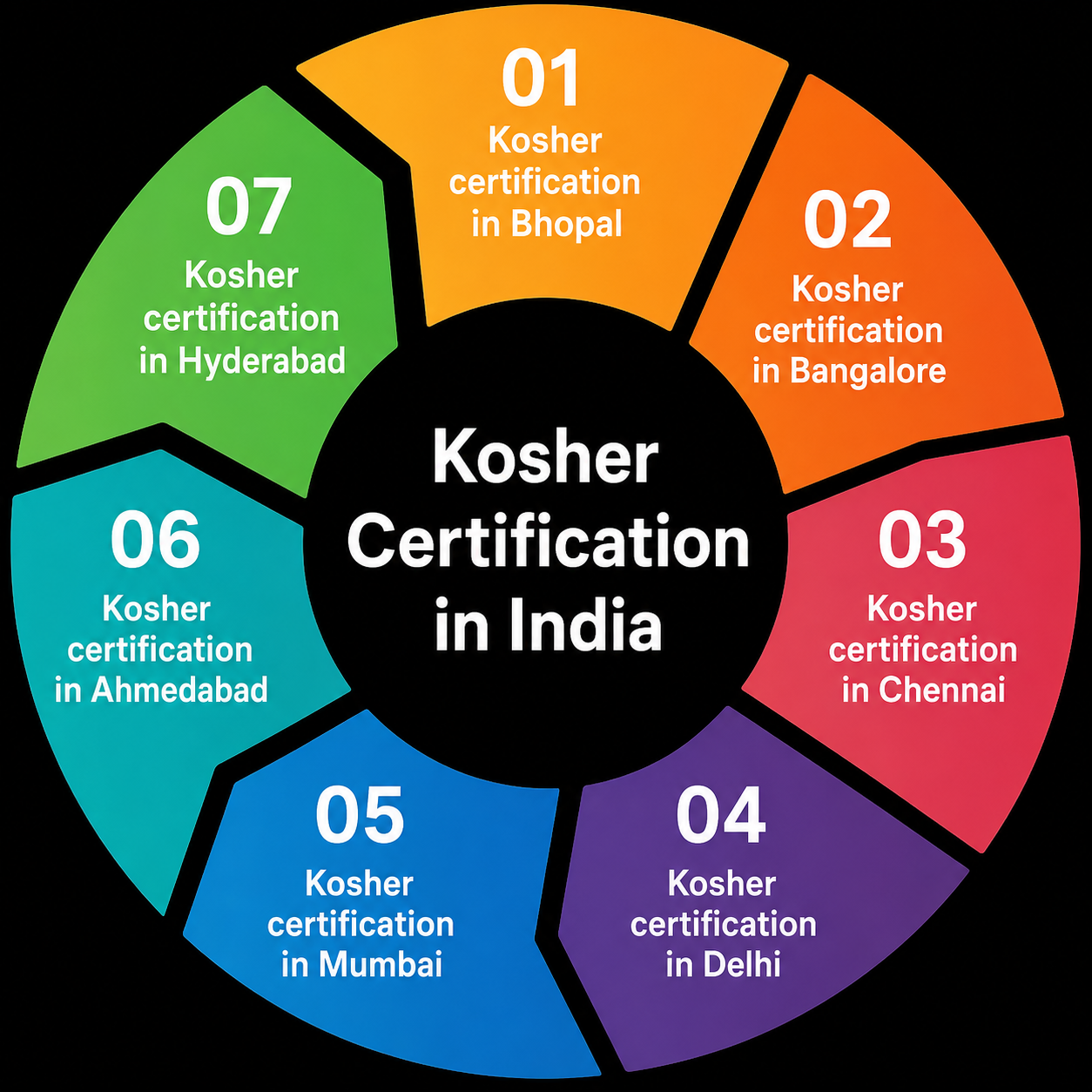
Many Indian food companies reach a point where local sales are steady but the real growth lies overseas. At that stage, buyers often ask a simple question: “Is your product kosher certified?” If you export from a major port city, Kosher certification in Mumbai can be one of the most practical steps toward answering yes. This guide looks at kosher certification from an exporter’s point of view and shows how it applies in seven Indian cities.
Why Importers Ask for Kosher Certification
Importers, distributors and retailers in the USA, Europe, the Middle East and Australia stock kosher products for a wide group of shoppers. Many of these buyers will not list a product without a recognised kosher symbol and certificate. Even when it is not compulsory, certification helps in several ways:
- It shortens supplier approval and onboarding.
- It reduces back-and-forth on ingredient and process questions.
- It lets your product qualify for kosher sections, institutional supply and food service contracts.
- It adds a documented layer of traceability that buyers appreciate.
What Exporters Should Prepare First
Before applying in any city, gather the following:
- A full product list with variants and pack sizes.
- Ingredient details, including suppliers, additives, colours, flavours and processing aids.
- A description of your production flow and equipment.
- Cleaning and changeover procedures between product lines.
- Packaging and labelling samples.
Having these ready makes the review faster and avoids last-minute surprises.
City-Wise Export Perspective
Kosher Certification in Mumbai
Mumbai and the nearby Nhava Sheva port handle a large share of India’s food and ingredient exports. Merchant exporters, spice traders and flavour companies here often work to tight shipping schedules, so having the certificate in hand before an order arrives avoids delays at the buyer’s end.
Kosher Certification in Delhi
Delhi NCR is a base for bakery, snack, dairy and packaged-food manufacturers that ship by air and by road to ports. For these units, Kosher certification in Delhi helps secure repeat orders from importers who prefer pre-certified suppliers.
Kosher Certification in Chennai
Chennai’s port supports exports of rice, oils, seafood products, spices and processed foods to many regions. Kosher certification in Chennai is valuable for exporters who sell bulk and private-label products where the buyer’s compliance team checks every document.
Kosher Certification in Bangalore
Bangalore’s food startups, health-food brands and beverage makers often sell cross-border through online channels. Kosher certification in Bangalore gives these younger brands the credibility that established exporters already enjoy.
Kosher Certification in Hyderabad
Hyderabad’s strengths in spices, nutraceuticals and food ingredients mean complex ingredient lists. Kosher certification in Hyderabad lets manufacturers confirm each component in advance, which matters when an overseas buyer asks for supporting documents.
Kosher Certification in Ahmedabad
Ahmedabad and Gujarat are known for namkeen, confectionery, spices, edible oils and dairy products, many produced by family-owned units moving into export. Kosher certification in Ahmedabad supports that shift by meeting buyer requirements from the start.
Kosher Certification in Bhopal
Central India supplies pulses, grains, soy products and agro-based foods. Producers in the region can use Kosher certification in Bhopal to supply merchant exporters and international buyers who want certified raw materials.
How the Process Works for Exporters
- Application: share your products and facility details.
- Document review: the agency checks ingredients and suppliers.
- Inspection: a plant visit confirms equipment and procedures.
- Corrections: any gaps are fixed before approval.
- Certificate and symbol: you receive the certificate and permission to use the symbol on approved items.
- Surveillance and renewal: periodic checks and yearly renewal keep it valid.
Mistakes That Delay Export Orders
- Waiting for a buyer to demand the certificate before applying.
- Changing a supplier or ingredient without informing the agency.
- Printing the symbol on packs before final approval.
- Letting the certificate lapse during an active contract.
Final Thoughts
Whether your plant is in Mumbai, Delhi, Chennai, Bangalore, Hyderabad, Ahmedabad or Bhopal, kosher certification is a practical way to meet global buyer expectations and open new markets. Start early, keep your ingredient records organised, and work with an agency that supports you through inspection and renewal.
FAQs
1. Do all food exports need kosher certification?
No. It is voluntary, but many buyers abroad prefer or require it before placing orders.
2. Can one certificate cover several products?
Yes. Approved products and production lines are listed on the certificate, so multiple items can be covered.
3. When should an exporter apply?
Ideally before approaching overseas buyers, so the certificate is ready when they ask for it.