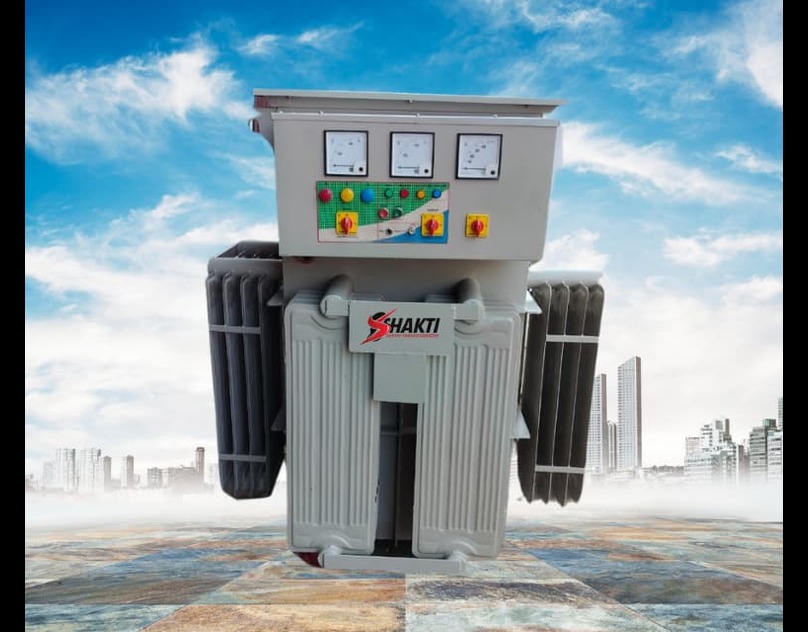
Many factories only think about voltage protection after something has gone wrong: a burnt motor, a failed drive, or a production line that keeps tripping. By then, the damage is already done. Knowing the early warning signs helps you act in time, and a good Servo Stabilizer is usually the simplest fix.
Warning Signs of Unstable Voltage
Watch for these patterns in your plant:
- Lights that flicker or dim when heavy machines start
- Motors that run hot, hum loudly or struggle to start
- Machines that trip or reset without any obvious fault
- Frequent failure of drives, control cards and PLCs
- Rising electricity bills with no increase in production
- Compressors, ACs and pumps that wear out faster than expected
If you notice two or more of these, measure your incoming voltage over a full working day. Readings that move more than 5-10% from the rated value are a clear sign that protection is needed.
What Causes Fluctuations?
- Overloaded or ageing local transformers
- Long cable runs from the substation
- Sudden switching of large neighbouring loads
- Seasonal demand peaks, especially in summer
- Poor wiring, loose joints and undersized cables inside the premises
Some of these you can fix internally. Others sit outside your control, which is why a stabilizer at the point of use matters.
Why Servo Technology Is the Preferred Choice
A Servo Voltage Stabilizer monitors the output continuously and corrects it by moving a servo motor along a transformer winding. Unlike step-based relay units, it does not jump between fixed taps, so the output stays smooth and accurate. For a deeper look at the range available, see this Servo Voltage Stabilizer overview.
Key benefits:
- Accurate output, typically within ±1%
- Stepless, continuous correction
- Handles wide swings in input voltage
- Suits heavy and sensitive loads alike
- Durable design for continuous duty
Single-Phase or Three-Phase?
Single-phase units suit small workshops, offices, shops and labs. Three-phase units are the norm for industrial machinery, where the load is balanced across three lines. Some three-phase stabilizers regulate each phase independently, which is valuable when phases carry unequal loads.
Sizing: A Simple Worked Example
Suppose your factory runs these machines:
| Equipment | Load |
|---|---|
| CNC machines (2) | 12 kVA |
| Compressor | 7 kVA |
| Lighting and misc. | 3 kVA |
| Total | 22 kVA |
Add a 25% margin for starting currents and future growth: 22 × 1.25 = 27.5 kVA. You would therefore choose a stabilizer of 30 kVA or the nearest standard rating above it. Undersizing causes overloading and early failure, while oversizing wastes money.
Air-Cooled or Oil-Cooled?
- Air-cooled: Lower cost, lighter and easier to service. Ideal for most indoor, ventilated installations.
- Oil-cooled: Better heat dissipation for heavy loads, dusty or hot environments and continuous high-duty operation.
Working With a Trusted Manufacturer
Quality varies widely across the market, so who builds the unit matters. A reputable Servo Stabilizer Manufacturer will openly share specifications, copper grade and test reports. If you are comparing options nationwide, a dependable Servo Stabilizer Manufacturer in India can offer standard ratings as well as custom-built solutions for unusual voltage ranges or load profiles.
Questions worth asking before you buy:
- What input voltage range does the unit cover?
- What is the output accuracy?
- Is there overload, short-circuit and high/low cut-off protection?
- What warranty and service support come with it?
- How quickly can spares and service engineers reach your site?
Local Supply and Support
Proximity helps. If your plant is in Delhi NCR, sourcing a Servo Stabilizer in Delhi means quicker delivery, on-site commissioning and faster response when servicing is needed. Whether you buy directly or through a servo stabilizer Supplier, confirm stock availability, installation help and after-sales terms in writing.
Maintenance Checklist
- Monthly: Check for unusual noise, heat or sparking
- Quarterly: Clean dust, inspect carbon brushes and the roller track
- Half-yearly: Tighten terminals and check earthing
- Yearly: Full service, including control card and servo motor inspection
Regular care keeps the unit accurate and avoids surprise breakdowns.
Final Thoughts
Voltage problems rarely fix themselves. Spot the warning signs early, calculate your load properly, choose the right phase and cooling type, and buy from a manufacturer who stands behind the product. The result is steadier production, fewer repairs and longer equipment life.