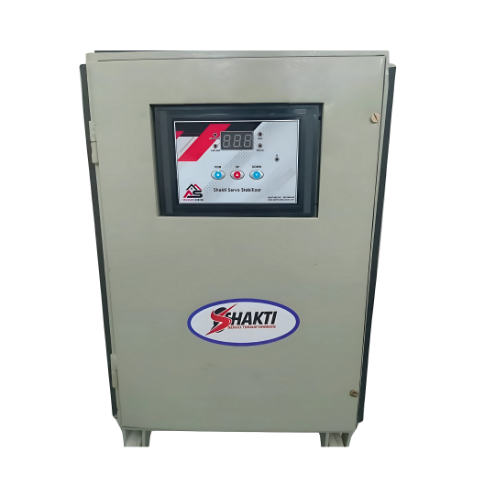
Large buildings place heavy and varied demands on the electrical supply. Air conditioners start and stop through the day, pumps and lifts kick in without warning, and lighting, kitchens and office equipment all add to the load. When the supply voltage is unstable, every one of these systems pays the price. A properly sized stabilizer at the main panel is the simplest way to protect them all, and a 15 Kva Servo Stabilizer is a strong fit for single-phase buildings with demanding loads.
Why Large Buildings Face Bigger Voltage Risks
In a large home or commercial space, many appliances run at once. That raises the total current drawn from the supply, which can pull the voltage down at peak hours. Long cable runs inside the building add further voltage drop. At quiet times the opposite can happen, with the supply rising above normal.
The result is a daily cycle of stress on motors, compressors and electronics. The damage is rarely dramatic. It shows up as air conditioners that fail early, pumps that burn out, lighting that flickers and control boards that need repeated repair.
Where a 15 kVA Unit Makes Sense
A 15 Kva Single Phase Stabilizer suits buildings where the combined load is too high for a small or mid-range unit. Common examples include:
- Large independent houses and villas with multiple air conditioners
- Showrooms and retail stores with heavy lighting and cooling
- Hotels, guest houses and banquet halls on single-phase supply
- Hospitals, clinics and diagnostic centres
- Schools, coaching centres and training institutes
- Restaurants, bakeries and commercial kitchens
- Small factories and workshops with several single-phase machines
In each case, one stabilizer at the main panel protects everything connected behind it, which is often tidier and more economical than fitting individual units to each appliance.
Single Phase Does Not Mean Small Load
Many people assume heavy loads automatically need three-phase supply. In reality, plenty of large homes and commercial spaces run on single phase. A 15 Kva Servo Stabilizer Single Phase is built for this situation. It accepts a single-phase input and delivers a stable single-phase output, so you protect a heavy load without major rewiring.
What the Servo Mechanism Does
A servo stabilizer constantly compares the output voltage with the target. When they differ, a servo motor moves a carbon brush along a transformer winding, adjusting the output in small steps. The correction is continuous and smooth, which is gentle on compressors, motors and electronic control boards. This is the main reason servo technology is preferred over coarser relay-based designs for large and valuable loads.
Air Cooling at Higher Capacity
The 15kVA Single Phase Air Cooled Servo Stabilizer removes heat through air circulation instead of oil. For commercial spaces, this has clear advantages: no oil to monitor, no leak risk near flooring or equipment, and simpler servicing. The condition is good airflow. Install the unit with open space around it and keep vents clear, because a larger unit produces more heat to dissipate.
Reading the kW and kVA Numbers
Facility managers often work in kilowatts, which is why many search for a Servo Stabilizer 15 Kilowatt. The units differ, though. kVA measures apparent power and kW measures real power, and the power factor links them. With a typical factor of 0.8, a 15 kVA stabilizer supports about 12 kW of real load. If your calculation shows close to 15 kW, choose the next size up. Never size a stabilizer right at the edge of your load.
A Sizing Method for Buildings
- Survey the loads. List air conditioners, pumps, lifts, kitchen equipment, lighting and office systems.
- Separate running load from surge. Note the largest motors and how often they start.
- Account for simultaneous use. Estimate what actually runs together at peak.
- Add a margin of 20 to 25 percent.
- Plan for growth. Buildings tend to add equipment over time.
Protection Features That Matter in Commercial Use
- Wide input range. Peak-hour dips can be deep, so the unit must cover them.
- Overload and short-circuit protection. Essential for safety on heavy loads.
- High and low cut-off. Disconnects the load when voltage leaves the safe window.
- Delay timer. Protects compressors from restarting into unstable supply.
- Bypass switch. Keeps the building powered during servicing.
- Digital metering. Lets staff check input and output at a glance.
Installation and Upkeep
Choose a dry, well-ventilated location near the main incoming supply, away from sun, dust and moisture. Use cables rated for the full load, tighten all terminals, and make sure earthing is done by a qualified electrician. For upkeep, clean the vents regularly, check connections for heat marks, and listen for changes in servo motor sound. Schedule periodic inspection of the carbon brush and control card.
Conclusion
A large building’s electrical system is only as reliable as the voltage feeding it. By correcting that voltage smoothly and covering the whole panel, a well-sized 15 kVA servo stabilizer protects air conditioners, machines and electronics together. Survey your loads carefully, leave a safety margin, and choose servo technology, and your building will run on steady power for years.