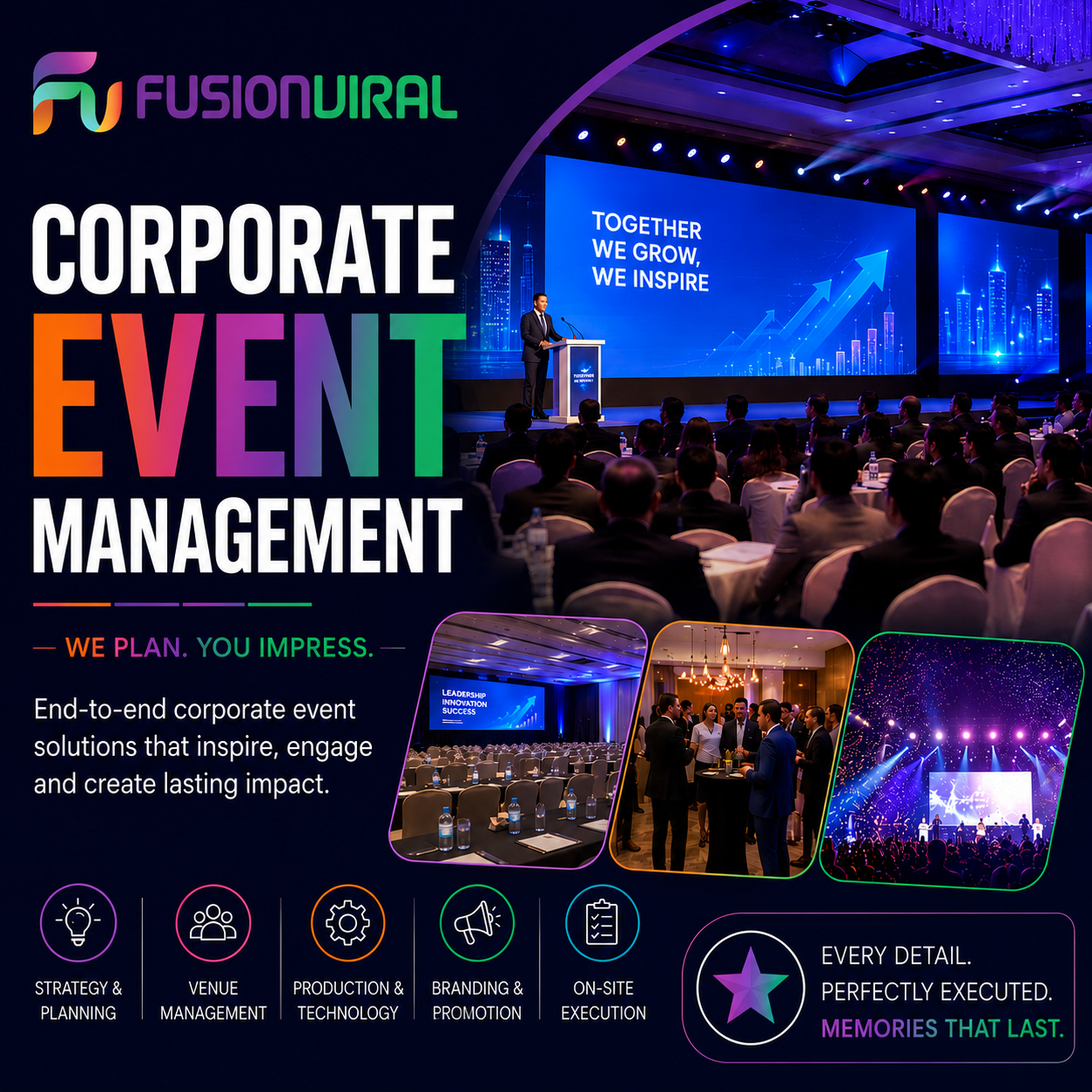
Corporate events are an important part of modern business communication, branding, and relationship building. Companies organize corporate events to connect with employees, clients, partners, investors, and industry professionals. These events can include conferences, seminars, product launches, award functions, annual meetings, team-building programs, exhibitions, workshops, and business networking sessions.
A well-planned corporate event is not just a gathering. It is a professional experience that reflects the company’s image, values, and goals. From venue selection and stage setup to guest management and event execution, every detail plays an important role in making the event successful.
Importance of Corporate Events
Corporate events help businesses communicate their message in a clear and impactful way. They provide a platform where companies can introduce new products, discuss strategies, celebrate achievements, train employees, and build stronger professional relationships.
For employees, corporate events create motivation and team spirit. For clients and partners, these events build trust and confidence. A successful event can improve brand reputation and create a positive impression in the market.
Types of Corporate Events
There are many types of corporate events based on business requirements. Conferences are organized to share knowledge, industry updates, and expert opinions. Seminars and workshops are useful for training, learning, and skill development.
Product launch events help companies introduce new products or services to the market. Award ceremonies and annual functions are organized to appreciate employees and celebrate company achievements. Team-building events help improve communication and coordination among employees. Business networking events allow professionals to meet, connect, and explore new opportunities.
Planning a Successful Corporate Event
Proper planning is the foundation of a successful corporate event. The first step is to understand the purpose of the event. A company should clearly decide whether the event is for promotion, training, celebration, networking, or brand awareness.
After deciding the goal, the next step is to plan the budget, venue, guest list, event theme, schedule, technical setup, food arrangements, branding materials, and entertainment if required. Every element should match the company’s professional image and event objective.
Role of Event Management in Corporate Events
Professional event management plays a major role in corporate events. Event planners handle everything from concept creation to final execution. They manage venue coordination, stage design, sound and lighting, registration, seating, branding, photography, videography, hospitality, and on-ground support.
Hiring an experienced event management team helps companies save time and avoid last-minute confusion. Professionals know how to manage vendors, timelines, guest experience, and technical requirements. This allows the company team to focus on their guests and business goals.
Benefits of Corporate Events
Corporate events offer many benefits to businesses. They help improve brand visibility, build strong relationships, and create direct communication with the target audience. These events also help companies present their achievements, culture, and future plans in a professional way.
For internal teams, corporate events improve employee engagement and motivation. Employees feel valued when companies organize appreciation programs, award nights, and team activities. For external audiences, events create a strong brand experience that can support business growth.
Corporate Events and Brand Image
A corporate event is a reflection of the company’s brand image. The quality of planning, design, communication, and guest experience directly affects how people view the company. A clean stage setup, proper branding, smooth coordination, and professional hospitality create a strong impression.
Branding elements like banners, digital screens, standees, welcome boards, brochures, and corporate gifts can make the event more memorable. When everything is planned properly, the event becomes a powerful tool for brand promotion and business communication.
Technology in Corporate Events
Technology has become an important part of corporate events. LED screens, live streaming, digital registration, QR-based entry, presentation tools, event apps, social media coverage, and interactive displays make events more modern and engaging.
Hybrid corporate events are also becoming popular, where people can attend both physically and online. This helps companies reach a larger audience and make participation easier for people from different locations.
FAQs
What are corporate events?
Corporate events are professional events organized by companies for employees, clients, partners, investors, or industry audiences. These may include conferences, seminars, product launches, meetings, award functions, and networking events.
Why are corporate events important?
Corporate events are important because they help businesses build relationships, improve brand image, motivate employees, share information, and create professional networking opportunities.
What are the common types of corporate events?
Common types include conferences, seminars, workshops, product launches, annual functions, award ceremonies, team-building events, exhibitions, and business networking events.
How can a corporate event be successful?
A corporate event can be successful with clear planning, proper budgeting, the right venue, smooth coordination, professional branding, good hospitality, and strong event execution.
Why hire an event management company for corporate events?
An event management company helps handle planning, coordination, vendors, stage setup, guest management, technical arrangements, and complete event execution professionally.
Conclusion
Corporate events are powerful tools for business growth, branding, employee engagement, and professional networking. A well-organized event can create a strong impression, improve relationships, and communicate the company’s message effectively. From small meetings to large conferences and product launches, every corporate event requires proper planning, creativity, and professional execution. With the right approach, corporate events can become memorable experiences that support both brand value and business success.