Kosher certification for food brands has become a practical growth tool, not just a religious label. Global importers, premium retailers and online marketplaces increasingly prefer products with a trusted kosher mark. As a result, Indian manufacturers are looking at certification as a way to enter new markets and win buyer confidence.
This article explains why demand is rising and how brands in different cities can benefit. It also shows what to prepare before you begin.
Why Food Brands Are Choosing Kosher
Kosher products are bought by far more than the Jewish community. Many shoppers see the symbol as a sign of careful sourcing, clean processing and strong supervision. Vegetarians, people with dietary restrictions and quality-focused families often look for it too.
For brands, the advantages are clear:
- Access to export markets that expect kosher compliance
- Better shelf appeal in premium and specialty stores
- Stronger trust among distributors and private label buyers
- Improved ingredient traceability and documentation
- A clear point of difference in a crowded category
What Kosher Certification Actually Checks
Certification covers three areas. First, every ingredient must be kosher or acceptable under kosher rules. Second, the equipment and production line must avoid cross-contact with non-kosher materials. Third, the facility must keep clear records so each batch can be traced.
Because of this, brands often improve their internal systems while preparing. Many report fewer supplier errors and tighter quality control afterwards.
City-Wise Opportunities for Food Brands
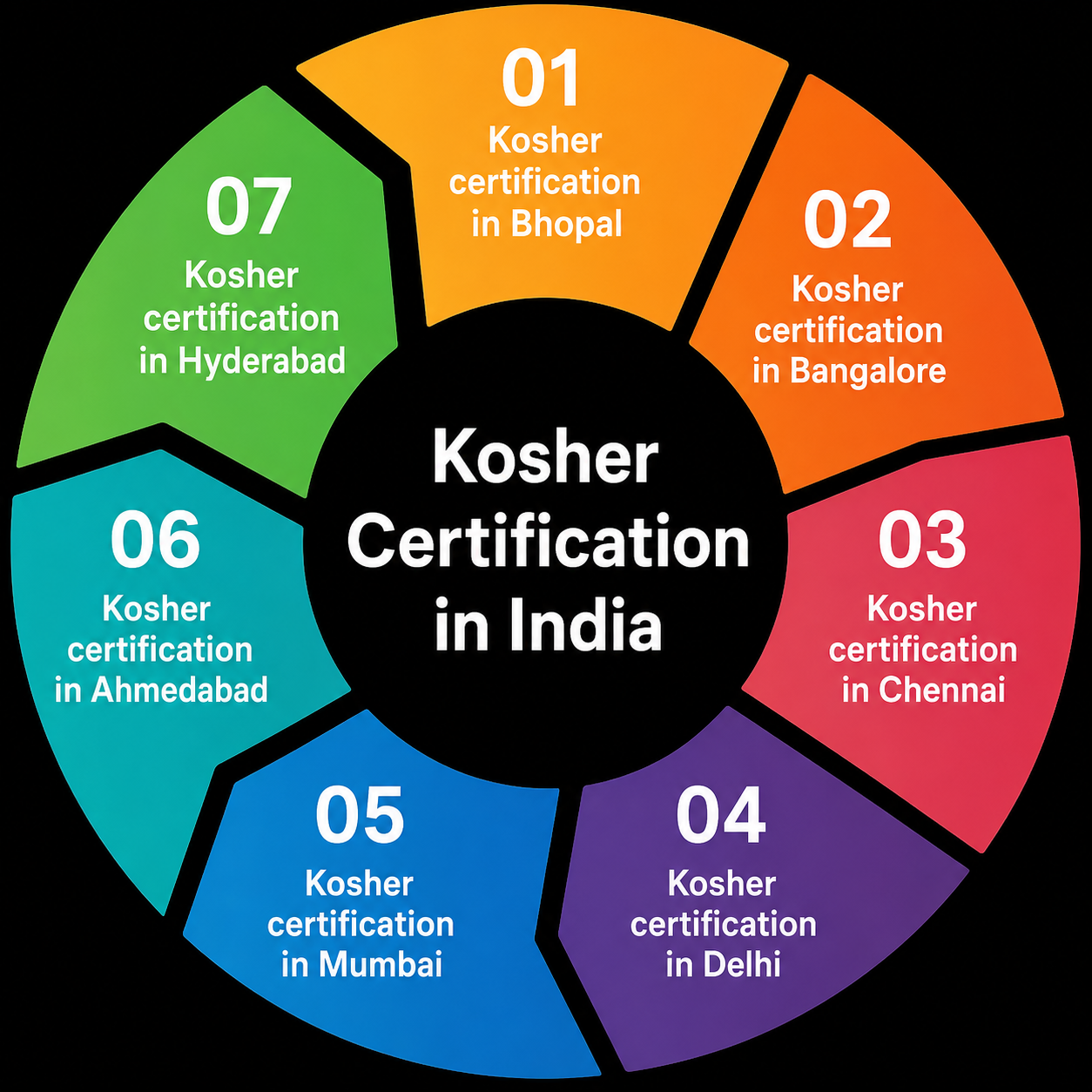
Each Indian city has its own food strengths. Here is how certification fits into several of them.
Bhopal
Central India is expanding fast in grains, pulses, dairy and processed foods. Smaller manufacturers here often believe certification is too complex. In reality, Kosher certification in Bhopal is just as accessible as it is in larger metros, and it can help local brands reach buyers far outside the region.
Bangalore
Bangalore is a hub for start-ups, health foods, beverages and D2C brands. These companies sell heavily online, where trust signals matter. With Kosher certification in Bangalore, young brands can strengthen their listings and appeal to international customers early.
Chennai
Chennai supports spices, edible oils, snacks and processed foods, many of which ship through its port. Exporters seeking Kosher certification in Chennai benefit from smoother buyer approvals, since certification answers a common compliance question upfront.
Delhi
Delhi and the NCR region host bakeries, spice processors, packaged food makers and ingredient suppliers. For companies exploring Kosher certification in Delhi, the biggest advantage is speed to market, because many local brands supply both domestic retail chains and overseas importers.
Mumbai
Mumbai is India’s leading trade gateway, with a strong base in confectionery, beverages, dairy and ready foods. Brands that choose Kosher certification in Mumbai are well placed to meet tight shipping schedules and the documentation demands of global buyers.
Ahmedabad
Ahmedabad and Gujarat are known for snacks, namkeen, edible oils and food ingredients. Many family-owned units are now scaling up. For them, Kosher certification in Ahmedabad offers a structured route into export-quality production without a complete operational overhaul.
Hyderabad
Hyderabad leads in nutraceuticals, flavours, additives and packaged foods. These products depend on detailed ingredient control. Companies pursuing Kosher certification in Hyderabad can use the process to validate complex formulations and satisfy demanding buyers.
How to Prepare Before You Apply
A little planning saves weeks. Start by listing all products and ingredients. Then collect supplier specifications and any existing safety certificates. Next, map your production flow and identify shared equipment. Finally, write down your cleaning and changeover steps.
Mistakes That Slow Down Approval
Brands often lose time by changing suppliers without notice or using unverified flavours and processing aids. Another common issue is ignoring shared equipment. In addition, some businesses forget renewal dates. Staying organised avoids all of these problems.
Picking the Right Certification Partner
Choose an agency that communicates clearly and is accepted by international buyers. Ask about inspection frequency, turnaround time and support after certification. A good partner explains each requirement and helps you fix gaps early.
Final Thoughts
Kosher certification for food brands is a smart step for any company that wants stronger trust and wider reach. Whether your plant is in Bhopal or Mumbai, the path is similar: prepare your documents, work with a reliable agency and keep your records clean. Done well, certification becomes a lasting sales advantage.