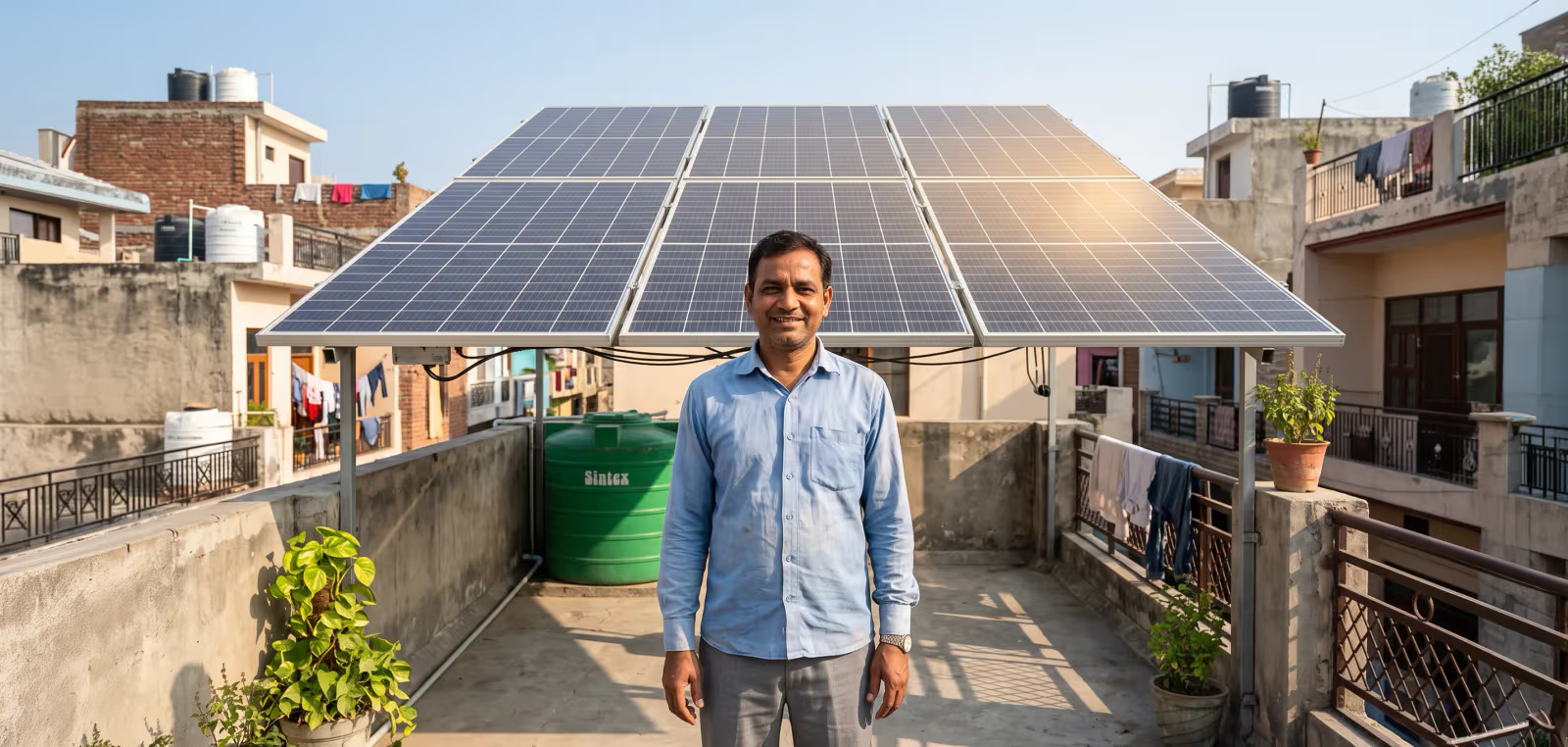
Solar energy is becoming an increasingly attractive option for households and businesses looking to manage electricity expenses and adopt renewable energy. With advancements in solar technology, installations are now suitable for a wide range of properties, from residential rooftops to commercial and industrial facilities.
However, the initial cost of purchasing solar panels, inverters, mounting systems, electrical components, and installation services can be a major consideration. This is why loans for solar installation are becoming an option worth exploring for people who want to move towards solar energy without paying the entire project cost upfront.
Understanding how solar financing works, what affects eligibility, how repayment is structured, and what to check before borrowing can help applicants make a more informed decision.
What Are Loans for Solar Installation?
Loans for solar installation are financing options designed to help eligible applicants meet the expenses associated with setting up a solar energy system.
Depending on the financing product and applicable terms, the funds may be used for eligible project expenses such as:
- Solar panels
- Solar inverters
- Mounting structures
- Electrical equipment
- Wiring and installation
- Labour and setup costs
- Other eligible solar-related expenses
Instead of arranging the complete installation cost from personal savings or business funds, an eligible borrower can finance the required amount and repay it through EMIs over the agreed tenure.
The exact loan amount, interest rate, tenure, documentation, and eligibility requirements vary depending on the lender and the applicant’s financial profile.
Why Is Solar Financing Becoming Important?
The biggest challenge for many solar buyers is not the technology itself but the initial investment.
A small residential solar system may have a manageable cost, while a larger commercial or industrial project can require considerably more capital. Businesses, in particular, may prefer to retain their available working capital for day-to-day operations and growth.
Financing can help distribute the cost over time.
For example, instead of paying the entire project cost at once, an eligible borrower can use financing for the required amount and make repayments according to a predetermined schedule.
This can make solar installation easier to plan from a cash-flow perspective.
Who Can Consider Financing for Solar Installation?
The suitability of solar financing depends on the applicant, project, and lender’s eligibility criteria.
Homeowners
Homeowners interested in rooftop solar can explore applicable financing options to manage the installation expense.
Small and Medium Businesses
Shops, offices, warehouses, workshops, and other businesses may consider financing when installing solar systems for their premises.
Commercial Establishments
Commercial properties with significant electricity consumption can evaluate solar installation as part of their long-term energy planning.
Industrial Units
Manufacturing facilities and other industrial businesses may consider larger solar projects depending on their electricity requirements, available space, and project feasibility.
For every category, the actual availability of financing depends on the applicable lender’s assessment and terms.
How Does Solar Installation Financing Work?
The process generally begins with understanding the project’s cost and financing requirement.
Step 1: Identify Your Solar Requirement
Determine the approximate solar capacity required based on your electricity consumption, property, and expected energy needs.
Step 2: Get a Detailed Quotation
A detailed quotation can help you understand the expected cost of equipment, installation, electrical work, and other project components.
Step 3: Calculate Your Funding Requirement
After considering your own contribution, determine the amount you need to finance.
Step 4: Check Eligibility
The lender may evaluate factors such as income, business performance, banking history, credit profile, existing obligations, and repayment capacity.
Step 5: Submit the Application
Submit the required application along with the relevant personal, financial, business, and project-related documents.
Step 6: Loan Assessment
The application is reviewed according to the lender’s applicable credit and eligibility process.
Step 7: Approval and Disbursement
If approved, the financing is provided according to the agreed terms and applicable disbursement process.
Step 8: Repayment
The borrower repays the financed amount through EMIs over the agreed tenure.
What Costs Should You Consider Before Taking a Solar Loan?
The cost of a solar project is not limited to the price of the panels.
Depending on the project, you may need to account for:
- Solar panels
- Inverters
- Mounting structures
- Electrical components
- Installation charges
- Wiring
- Labour
- Maintenance requirements
- Other project-related expenses
When calculating the financing requirement, it is useful to have a complete project estimate rather than relying only on the equipment price.
What Factors Affect Eligibility for Solar Financing?
Eligibility can differ from one financing product to another. However, lenders may consider several factors when evaluating an application.
Income or Business Cash Flow
The ability to repay the loan is an important consideration. For businesses, financial performance and cash flow may form part of the assessment.
Credit History
Credit history may be reviewed as part of the overall application assessment.
Existing Financial Obligations
Existing loans and repayment commitments can affect the applicant’s overall repayment capacity.
Project Cost
The total cost and nature of the proposed solar project may also be relevant.
Documentation
Complete and accurate documentation can help support the application process.
Applicants should always review the specific eligibility criteria applicable to the financing option they are considering.
How Much Can You Borrow for Solar Installation?
There is no universal loan amount for every solar project.
The amount an applicant may qualify for can depend on:
- Total project cost
- Applicant profile
- Repayment capacity
- Income or business cash flow
- Credit history
- Existing obligations
- Nature and size of the project
- Applicable lender criteria
A borrower should first calculate the actual funding requirement and then determine an appropriate loan amount.
Borrowing more than necessary can increase the overall repayment burden, so the financing amount should be planned carefully.
How Is the EMI Determined?
The EMI for a solar installation loan generally depends on three major factors:
Loan Amount
Interest Rate
Loan Tenure
A higher loan amount generally results in a higher EMI when other factors remain unchanged. A shorter tenure can also increase the monthly repayment, while a longer tenure may reduce the EMI but increase the overall interest cost.
Therefore, borrowers should compare both the monthly EMI and the total repayment amount before making a decision.
Why Should Businesses Consider Solar Financing?
For businesses, solar installation can be a long-term infrastructure investment.
Electricity is an important operating expense for many businesses, particularly those running offices, factories, warehouses, retail facilities, and other commercial spaces.
A business evaluating solar can consider:
- Current electricity expenses
- Solar installation cost
- Expected energy generation
- Potential electricity savings
- Maintenance requirements
- Financing cost
- Expected repayment period
- Available cash flow
Financing can potentially allow the business to spread the initial investment rather than using a significant portion of its working capital at once.
However, every project should be evaluated according to its own financial and operational circumstances.
Solar Financing or Self-Funding: Which Is Better?
There is no single answer because both approaches have different financial implications.
Self-Funding
Paying from savings can eliminate loan interest and monthly repayment obligations.
However, using a large amount of savings for the installation may reduce the cash available for emergencies or other business requirements.
Financing
A loan can help distribute the cost through scheduled repayments and may allow the borrower to preserve some available liquidity.
The trade-off is the interest and other applicable borrowing costs.
The better option depends on the individual’s or business’s financial position and objectives.
What Should You Compare Before Choosing a Loan?
Do not select a financing option only because it offers a convenient EMI.
Consider the complete cost and conditions, including:
Interest Rate
Check the applicable rate and understand how it impacts total repayment.
Processing Charges
Review any applicable processing or administrative fees.
Loan Tenure
Compare different tenure options and select one that aligns with your repayment capacity.
Total Repayment
Calculate the total amount payable over the complete loan period.
Prepayment Conditions
Understand the applicable terms if you want to repay the loan before the scheduled maturity.
Eligibility Requirements
Make sure you meet the relevant eligibility criteria before proceeding with an application.
Common Mistakes to Avoid
A solar installation is a significant financial decision, so careful planning is important.
Taking a Higher Loan Than Required
Calculate the project cost carefully and avoid unnecessary borrowing.
Focusing Only on the EMI
A lower EMI may come with a longer tenure and potentially higher overall interest cost.
Ignoring Additional Charges
Review all applicable charges instead of considering only the interest rate.
Not Checking Project Costs Properly
Ask for a detailed quotation covering the complete installation rather than estimating the cost from solar panels alone.
Underestimating Repayment Obligations
Make sure the EMI fits comfortably within your personal income or business cash flow.
Not Reading the Loan Terms
Understand the financing conditions, repayment schedule, applicable charges, and prepayment provisions before accepting the loan.
How Ratnaafin Can Support Your Financing Requirement
Choosing an appropriate financing partner is an important part of planning a solar project.
Ratnaafin offers financing solutions for eligible requirements, allowing applicants to explore funding based on their specific financial and business needs.
Before applying, applicants should understand the applicable eligibility criteria, financing amount, interest rate, repayment tenure, documentation requirements, and other loan terms.
A financing decision should be made after considering both the cost of the solar project and the applicant’s ability to manage the repayment.
A Simple Checklist Before Applying
Before applying for loans for solar installation, consider the following checklist:
- Determine your solar capacity requirement.
- Obtain a detailed project quotation.
- Calculate your total installation cost.
- Decide how much you can contribute yourself.
- Calculate the financing amount required.
- Review your repayment capacity.
- Compare applicable interest rates.
- Check processing and other charges.
- Compare available loan tenures.
- Understand prepayment conditions.
- Keep the required documents ready.
- Read the complete financing terms before accepting the loan.
Final Thoughts
Solar energy can be a practical long-term investment for individuals and businesses, but the upfront installation cost can sometimes become a barrier. Loans for solar installation can provide eligible borrowers with a way to manage this initial expense through structured repayments.
The important thing is to look at solar financing as part of the complete project plan. Calculate the installation cost, understand the expected financial benefits, determine an affordable EMI, and compare the total cost of borrowing before making a decision.
For eligible applicants, Ratnaafin can be explored as a financing partner based on their specific requirements. A carefully planned solar project, combined with suitable financing, can make the move towards renewable energy more manageable.
FAQs
Q1. What are loans for solar installation?
Loans for solar installation are financing options that can help eligible individuals or businesses fund the cost of installing a solar energy system. The borrowed amount is repaid through EMIs according to the applicable loan terms.
Q2. Can I get a loan for solar panel installation?
Eligible applicants may be able to obtain financing for solar panel installation, depending on the lender’s eligibility criteria, project requirements, repayment capacity, and other applicable conditions.
Q3. Can businesses apply for loans for solar installation?
Yes, eligible businesses can explore financing for solar installation. The lender may assess factors such as business performance, financial position, project cost, credit history, and repayment capacity.
Q4. How much loan can I get for a solar installation?
The eligible amount depends on factors such as the total project cost, applicant profile, income or business cash flow, credit history, repayment capacity, and the lender’s applicable criteria.
Q5. What documents are required for a solar installation loan?
The required documents can vary depending on the lender and applicant. They may include KYC documents, bank statements, income or business documents, financial information, and a quotation for the proposed solar project.
Q6. What is the interest rate on a solar installation loan?
The applicable interest rate depends on the financing product, applicant profile, loan amount, tenure, and other relevant factors. Applicants should check the current applicable rate and complete terms before applying.
Q7. How is EMI calculated for solar installation financing?
The EMI generally depends on the loan amount, applicable interest rate, and repayment tenure. Processing fees and other applicable charges should also be considered when evaluating the total cost of financing.
Q8. Can I finance the cost of a rooftop solar system?
Depending on the applicable financing product, eligible rooftop solar projects may qualify for financing. The lender’s specific criteria and the expenses covered under the financing should be checked before applying.
Q9. Does credit history matter when applying for solar financing?
Credit history may be considered during the loan assessment process. Lenders may also evaluate income, business cash flow, existing obligations, repayment capacity, and other financial factors.
Q10. Is taking a loan for solar installation a good idea?
It can be a suitable option when the solar project makes financial sense and the repayment obligation fits comfortably within the borrower’s budget or business cash flow. The complete project and financing costs should be evaluated before borrowing.