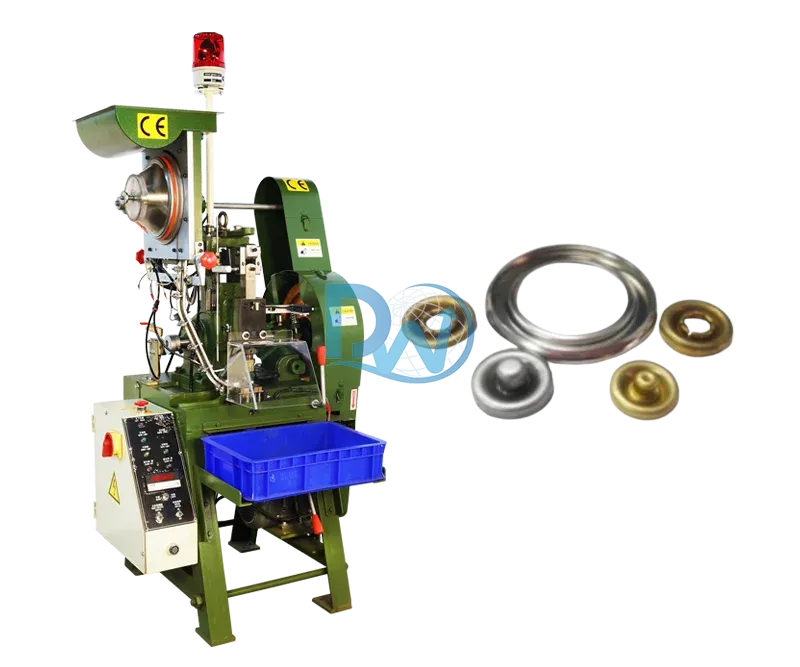
Snap buttons are commonly used in shirts, jeans, jackets, children’s clothing, uniforms, raincoats, leather goods, bags, footwear, and fashion accessories. Attaching these buttons manually can be slow and may produce inconsistent results. A snap button machine makes the process faster, improves alignment, and ensures that every fastener is securely attached.
The snap button machine price in India depends on the machine type, automation level, operating speed, compatible button styles, construction quality, and included accessories. Buyers can choose from simple hand presses, electric models, semi-automatic units, pneumatic systems, and fully automatic industrial machines.
Average Snap Button Machine Price in India
A basic manual snap button press is one of the most affordable options. Current supplier listings show manual machines priced from approximately ₹600 to ₹1,600. These machines are suitable for boutiques, tailoring shops, sample-making units, and small home-based businesses.
Electric and entry-level snap button attaching machines are commonly listed between approximately ₹13,500 and ₹35,000. Their actual functionality varies, so buyers should check whether the machine only performs the pressing operation or also provides automatic feeding.
Semi-automatic button attaching machines may cost around ₹90,000 or more, depending on their feeding mechanism and production capabilities. Heavy-duty automatic machines are listed at approximately ₹3.25 lakh to ₹3.75 lakh per unit.
These prices are indicative market listings, not guaranteed selling prices. GST, freight, installation, dies, feeders, compressors, and operator training may be charged separately.
Manual Snap Button Press
A manual press operates through a lever mechanism. The operator places the snap button components and garment material inside the die and pulls the handle to attach the fastener.
This machine is suitable for businesses with a limited number of daily orders. It does not require electricity, occupies little space, and is relatively easy to maintain.
However, the operator must position every component manually. This can reduce speed during large production runs. Separate dies may also be needed for different snap sizes, eyelets, jeans buttons, rivets, and plastic fasteners.
Electric Button Attaching Machine
An electric snap button machine uses a motor to perform the pressing action. It generally offers faster and more consistent operation than a manual machine.
Supplier listings include electric or entry-level automatic machines at approximately ₹13,500, ₹16,500, ₹22,000, and ₹35,000. The machines differ considerably in their motor power, construction, speed, and level of automation.
An electric model can be useful for small and medium garment units that process regular orders but do not require a fully automated production line.
Semi-Automatic Snap Button Machine
A semi-automatic snap button machine combines operator control with selected automated functions. For example, the machine may automatically feed one button component while the operator positions the fabric.
This system reduces repetitive handling and improves production speed. It can be suitable for garment manufacturers, bag-making units, uniform suppliers, and medium-scale production facilities.
Before purchasing, buyers should check which tasks are actually automatic. The term “semi-automatic” can refer to different configurations depending on the supplier and model.
Fully Automatic Industrial Machine
Fully automatic machines are designed for large garment factories and high-volume manufacturing units. Depending on the configuration, they may automatically feed the snap components, position them in the attachment area, and complete the pressing process.
Industrial machines are significantly more expensive. Current supplier listings show selected heavy-duty models at approximately ₹3.25 lakh to ₹3.75 lakh, with stated capacities varying by product and operating conditions.
Although the initial investment is higher, automation can reduce labour requirements, increase daily output, and improve consistency across large orders.
What Influences the Machine Price?
The level of automation has the greatest effect on price. A manual press costs less because it has no motor, sensors, or feeding system. Automatic machines cost more because they include additional mechanisms and electronic components.
Machine capacity is another important factor. A unit designed for occasional boutique work will cost less than an industrial machine intended for continuous factory production.
Other pricing factors include:
- Supported snap button sizes and materials
- Number of dies supplied with the machine
- Motor and control-system quality
- Automatic button-feeding capability
- Pneumatic or electrical requirements
- Safety sensors and operator protection
- Machine brand and country of manufacture
- Warranty and after-sales service
The buyer should calculate the complete setup cost instead of considering only the advertised machine price.
Check the Dies and Accessories
The die is the component that holds and presses the snap button. Different fasteners generally require different dies. A machine supplied without the necessary die may not be ready for immediate use.
Buyers should ask whether the quoted price includes button dies, feeders, table, motor, stand, compressor, installation, and training. The availability and future cost of replacement dies should also be confirmed.
How to Choose the Right Machine
Begin by identifying the fastener type used in your products. Ring snaps, spring snaps, plastic snaps, rivets, eyelets, and jeans buttons may require different machines or attachments.
Next, estimate the required daily output. A manual press may be enough for sample work and limited orders. Regular commercial production may justify an electric or semi-automatic model, while large factories may benefit from a fully automatic machine.
Ask the supplier to test the machine with your actual fabric and buttons. Observe whether the snaps remain properly aligned and securely attached without tearing or marking the material.
Frequently Asked Questions
What is the lowest snap button machine price in India?
Basic manual presses are currently listed from approximately ₹600, although the final price depends on the machine quality and included dies.
How much does an electric snap button machine cost?
Entry-level electric and button-attaching machines are commonly listed between approximately ₹13,500 and ₹35,000.
Is a manual press suitable for garment production?
It is suitable for tailoring shops, boutiques, sampling, repairs, and small production quantities. It may be too slow for continuous factory use.
Can the same machine attach all snap buttons?
Not necessarily. Compatibility depends on the machine, feeding system, button type, size, and installed die.
Are dies included in the listed price?
Some machines include one standard die, while others are supplied without dies. Buyers should request a detailed written quotation.
Should I buy an automatic snap button machine?
An automatic model is useful when production volume is high enough to justify its purchase, maintenance, and setup costs.
Conclusion
The snap button machine price in India starts from a few hundred rupees for a basic manual press and can exceed ₹3 lakh for an industrial automatic system. The best machine is not always the cheapest or most advanced option. It should match the buyer’s fastener type, daily production target, available workforce, and budget. Comparing complete quotations, testing product samples, and checking technical support can lead to a safer and more profitable purchase.