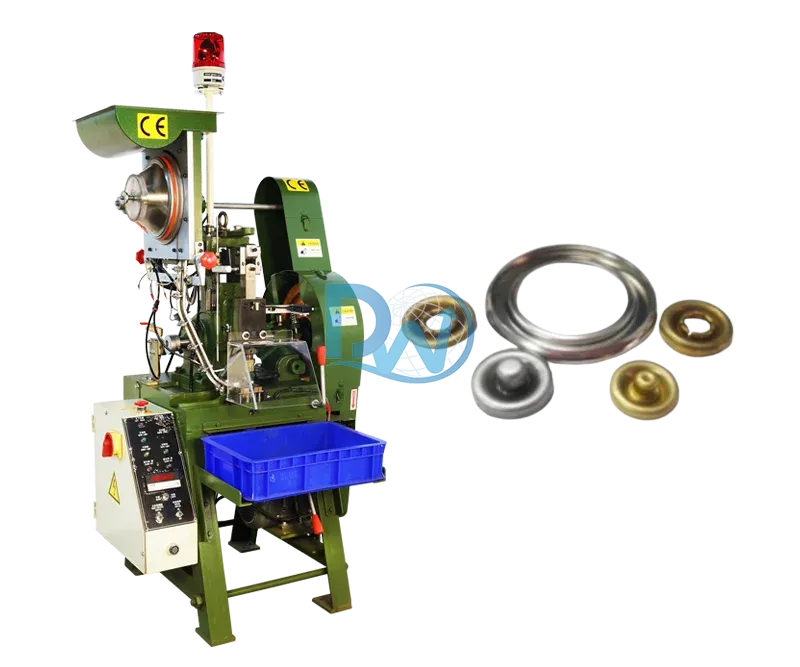
Garment manufacturing involves many small operations that must be completed quickly and accurately. Attaching snap buttons is one such process where poor alignment or uneven pressure can affect both the appearance and usability of the finished product. A Semi Automatic Snap Button Machine helps manufacturers install snap fasteners more efficiently while maintaining operator control over material placement.
This machine is suitable for garment factories, tailoring units, leather workshops, bag manufacturers, footwear businesses, upholstery units, and fashion-accessory producers. It offers a useful middle ground between a fully manual press and an advanced automatic fastening system.
Understanding Semi-Automatic Button Fixing
In a semi-automatic setup, the operator generally places the snap components and material into the correct position. The machine then performs the pressing action using mechanical, pneumatic, or motor-assisted power.
The operator remains responsible for alignment and feeding, but less physical pressure is required than with a manual hand-operated machine. This can improve working speed and reduce fatigue during repeated production.
The exact process may vary according to the machine model. Some machines use a foot pedal, allowing the operator to keep both hands available for positioning the fabric. Pneumatic versions use compressed air to produce a smooth and controlled pressing movement.
Suitable for Different Snap Fasteners
A Semi Automatic Snap Button Machine may support several types of fastening components when used with compatible dies. These can include ring snaps, spring snaps, press studs, jeans buttons, rivets, hooks, eyelets, and decorative metal fasteners.
Every fastener design usually requires a specific die set. The die holds the upper and lower button parts in the correct position while the machine applies pressure.
Using the correct die is essential because even a small mismatch can damage the button surface or create an insecure fitting. Manufacturers who work with multiple snap sizes should keep labelled die sets for faster production changes.
Supporting Higher Production Output
Manual fastening requires continuous physical effort, which can slow down work as the operator becomes tired. Semi-automatic equipment performs the pressure-intensive part of the operation, allowing workers to maintain a more consistent production pace.
The machine can be particularly valuable when processing medium or large orders. Shirts, jackets, jeans, uniforms, children’s garments, rainwear, and workwear may require several snap buttons on each item.
Faster fastening can help reduce production bottlenecks and support timely order completion. However, actual output depends on operator experience, fastener feeding, product design, and machine configuration.
Improving Fastening Consistency
Snap buttons must be installed with sufficient pressure to remain secure without being crushed. Uneven pressure can result in loose fasteners, damaged caps, poor closure, or fabric tearing.
A properly adjusted Semi Automatic Snap Button Machine applies controlled force during each cycle. This helps improve consistency across multiple garments and reduces variation between operators.
Accurate placement is equally important. Marking the button positions before production can help workers maintain uniform spacing. Guides or positioning fixtures may also be used for products requiring repeated placement at the same location.
Applications Beyond Clothing
Although garment production is a major application, semi-automatic snap machines are also useful in other industries. Bag manufacturers can use them for handbags, backpacks, wallets, pouches, and luggage products.
Leather businesses may install snaps and rivets on belts, folders, footwear, key holders, and fashion accessories. Upholstery workshops can use suitable machines for cushions, covers, vehicle interiors, and decorative fabric products.
They may also be used for tents, banners, caps, baby products, rain covers, craft items, stationery products, and promotional merchandise.
Material thickness and fastener compatibility should always be checked before beginning production.
Selecting the Appropriate Machine
Production volume is one of the first factors to consider. A small workshop may need a compact and simple model, while a larger manufacturing unit may require a stronger pneumatic machine for continuous operation.
Buyers should check machine pressure, working height, throat depth, operating system, die compatibility, and available safety controls. The machine should have a stable frame to minimise movement during pressing.
Pneumatic machines require an appropriate air compressor and reliable air supply. Buyers should include compressor capacity, power consumption, workspace, and maintenance requirements in their planning.
Availability of spare parts, technical assistance, and replacement dies should also influence the purchasing decision.
Testing Before Bulk Production
A trial installation should always be completed before processing a full batch. The operator should attach the snap to a sample made from the same fabric or material as the final product.
The button should then be checked for alignment, appearance, opening strength, and secure fitting. Pressure adjustments should be made gradually until the desired result is achieved.
Testing is especially important when changing the fabric thickness, snap size, fastener material, or die set. Settings that work for denim may not be suitable for lightweight fabric or leather.
Safety During Operation
The pressing area can cause serious finger injuries if the machine is handled carelessly. Operators should receive practical training and understand the function of the pedal, controls, guards, and emergency system.
Hands should remain away from the dies when the machine is activated. Loose clothing, jewellery, and hair should be kept clear of moving parts.
The air or power supply should be disconnected before changing dies, cleaning the pressing area, or carrying out maintenance.
Maintenance for Reliable Performance
Regular cleaning helps remove fabric fibres, dust, oil, and small metal particles. Dies should be checked for wear, looseness, and surface damage.
Pneumatic hoses and connections should be inspected for air leaks. Moving components should be lubricated only according to the manufacturer’s recommendations.
Loose screws, uneven pressure, unusual vibration, or excessive noise should be investigated promptly. Preventive maintenance can reduce production interruptions and extend machine life.
Frequently Asked Questions
1. How is a semi-automatic machine different from a manual press?
A semi-automatic machine uses assisted power for pressing, while a manual press depends mainly on the operator’s physical force.
2. Can it fix snaps on denim fabric?
Yes, compatible machines and dies can attach snap buttons to denim, provided the pressure and fastener specifications are suitable.
3. Can one machine install rivets and eyelets?
Some models can install different fasteners by changing the die set. Machine compatibility should be confirmed before use.
4. Why are buttons getting damaged during pressing?
Possible causes include excessive pressure, incorrect dies, poor alignment, defective fasteners, or incompatible button components.
5. Does every machine require electricity?
Not necessarily. Some models are pneumatic, mechanical, motorised, or use a combination of systems.
6. Is operator training necessary?
Yes, training is important for correct placement, pressure adjustment, die changing, safety, and quality control.
7. How often should the dies be inspected?
Dies should be checked regularly and whenever fastening quality, alignment, or button appearance begins to change.
Conclusion
A Semi Automatic Snap Button Machine can improve fastening speed, consistency, and operator comfort in garment and accessory production. It supports a wide range of applications while allowing workers to control material positioning and final quality.
Choosing a suitable model, using accurate dies, testing each production setup, and following proper safety and maintenance practices can help businesses achieve secure and professional snap-button installation.