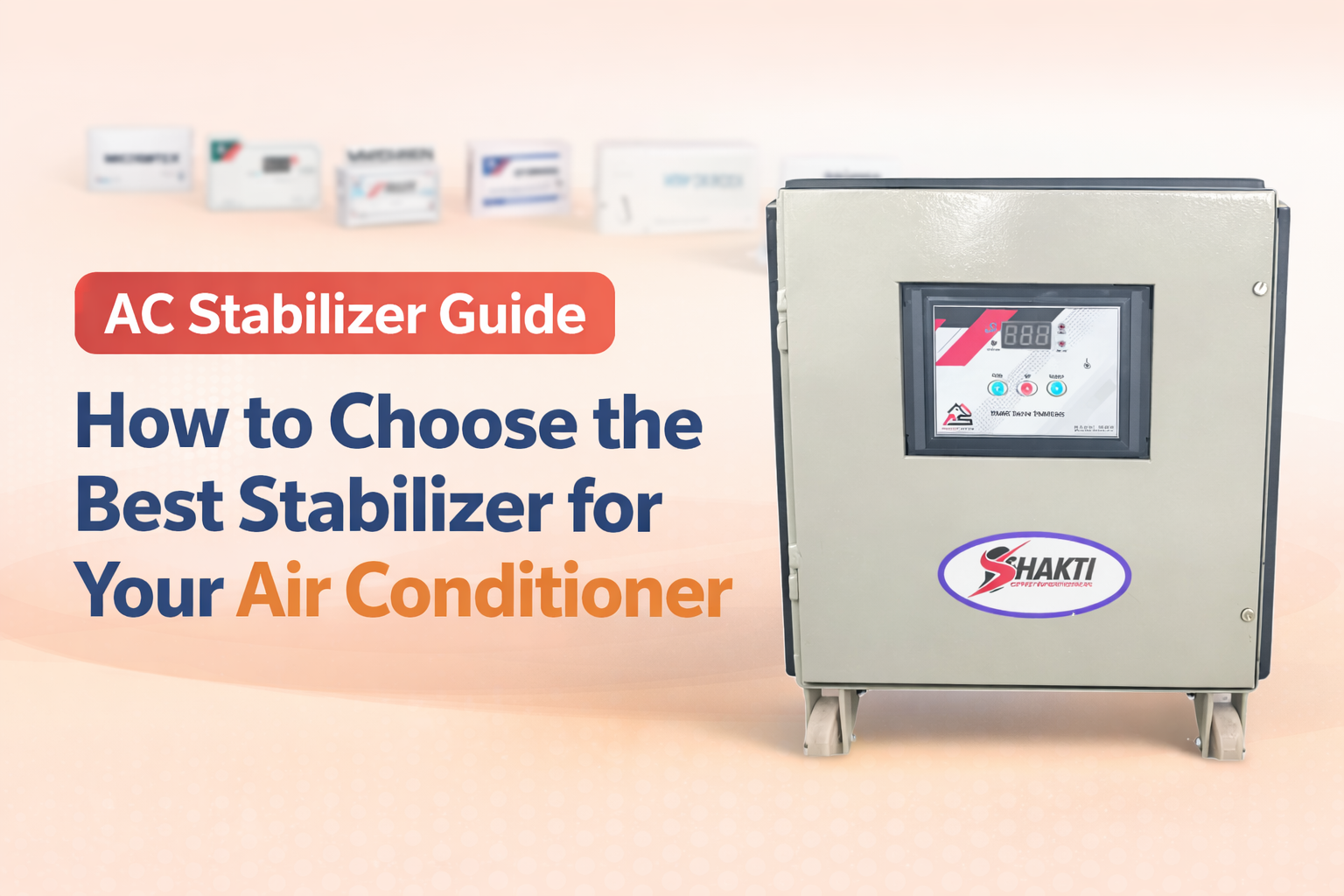
Buying an air conditioner is a long-term investment, but many people overlook one critical factor—power stability. Inconsistent voltage supply can silently damage your AC over time, reducing its efficiency and increasing repair costs.
A well-chosen stabilizer acts as a protective layer between your AC and unstable power conditions. This guide focuses on helping you make a practical and informed decision when selecting the right AC stabilizer.
Understanding the Role of a Stabilizer
An AC stabilizer is responsible for maintaining a consistent voltage level, regardless of fluctuations in the power supply. It detects voltage variations and corrects them before they reach the air conditioner.
This ensures that the internal components, especially the compressor, function smoothly without stress or damage.
Signs You Need an AC Stabilizer
Many users are unsure whether they actually need a stabilizer. Here are some clear signs:
- Frequent power fluctuations in your area
- AC shutting down automatically
- Unusual noise or reduced cooling efficiency
- Sudden spikes in electricity supply
If you notice any of these issues, installing a stabilizer becomes essential.
Stabilizer vs Built-in Protection in Modern ACs
Modern inverter ACs often come with built-in voltage protection. However, this protection is limited and works only within a certain voltage range.
External stabilizers provide:
- Wider voltage correction range
- Better protection during extreme fluctuations
- Additional safety for long-term usage
For areas with unstable power supply, relying only on internal protection may not be sufficient.
Key Factors to Consider Before Buying
Power Requirement
Always match the stabilizer capacity with your AC:
- Small rooms (1 Ton): Around 4 kVA
- Medium rooms (1.5 Ton): Around 5 kVA
- Large rooms (2 Ton): Around 6 kVA
Selecting the correct capacity ensures smooth performance without overload.
Voltage Range Compatibility
Understanding your local voltage condition is important.
- Stable areas: Standard range stabilizer
- Fluctuation-prone areas: Wide range stabilizer
A wider input range offers better protection against unpredictable voltage swings.
Technology Type
There are mainly two options available:
Relay-Based Stabilizers
Suitable for basic use and moderate voltage variation.
Servo-Controlled Stabilizers
Provide precise voltage correction and are ideal for consistent and heavy usage.
For users looking for reliability, servo stabilizers are the preferred choice.
Why Shakti Servo Stabilizer Stands Out
When selecting a stabilizer, quality and performance should be top priorities. Shakti Servo Stabilizer is designed to deliver stable output even in challenging voltage conditions.
What makes it a strong option:
- Consistent voltage regulation
- Suitable for both home and commercial AC units
- Strong internal components for long-term use
- Efficient performance with minimal power loss
- Designed for Indian power conditions
This makes it a practical investment for users who want dependable protection.
Installation and Placement Tips
Proper installation plays a major role in stabilizer performance:
- Install in a well-ventilated area
- Avoid direct exposure to heat and moisture
- Ensure proper earthing
- Use professional installation for safety
Correct placement improves efficiency and extends the life of the device.
Common Buying Mistakes
Many buyers make avoidable mistakes that affect performance:
- Choosing based only on price
- Ignoring voltage range specifications
- Buying undersized stabilizers
- Not checking warranty or quality
A careful approach can help you avoid these issues and ensure long-term reliability.
Frequently Asked Questions
Do all ACs require a stabilizer?
Not all, but in areas with frequent voltage fluctuations, it is highly recommended.
Can a stabilizer improve AC performance?
Yes, it ensures consistent power supply, which helps maintain efficient cooling.
Is a servo stabilizer better than a regular stabilizer?
Yes, it provides more accurate voltage control and better protection.
How long does a stabilizer last?
With proper maintenance, it can last several years without major issues.
Conclusion
Choosing the right servo stabilizer for AC is not just about protection—it is about ensuring consistent performance and avoiding unnecessary expenses. By focusing on capacity, voltage range, and build quality, you can make a smart and reliable choice.
Read More – AC Stabilizer Guide: How to Choose the Best Stabilizer for Your Air Conditioner