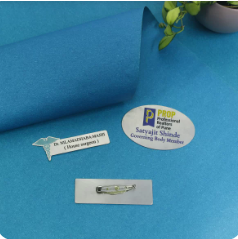
Professional identification plays an important role in creating an organised and trustworthy environment. A Customized Name Badge gives employees a clear identity while helping customers, visitors, and team members communicate more comfortably. It can display a person’s name, designation, department, company logo, or other useful information in a clean and professional format.
Customized badges are commonly used in corporate offices, hospitals, hotels, retail stores, schools, restaurants, conferences, exhibitions, and service-based businesses. Their design can be adapted according to the organisation’s branding, employee uniforms, and daily working conditions.
Creating a Strong Professional Impression
The appearance of employees can influence how customers perceive a business. A neat and well-designed name badge helps create a professional first impression. It shows that the organisation pays attention to presentation, communication, and employee identity.
When staff members wear badges, customers can address them by name instead of using general terms. This makes conversations feel more personal and improves the overall service experience.
A Customized Name Badge can also reduce confusion in large workplaces by clearly showing names, roles, and departments. Visitors can quickly identify receptionists, managers, sales representatives, technicians, and support staff.
Supporting Consistent Brand Presentation
A name badge is a small but highly visible branding element. By adding the company logo, brand colours, and approved typography, organisations can maintain consistency across their teams.
The badge can be designed to match uniforms, office interiors, business cards, signage, and other promotional materials. This consistent presentation strengthens brand recognition and gives employees a unified appearance.
The Second Project creates customised badge designs that can reflect the personality and visual identity of different organisations. Whether a business prefers a modern, elegant, colourful, formal, or minimal style, the badge can be developed accordingly.
Material Choices for Different Requirements
Customized name badges are available in several materials, each offering a different appearance and level of durability.
Acrylic badges are lightweight, versatile, and cost-effective. They are available in multiple colours and can carry printed logos, names, and design elements. These badges are suitable for offices, schools, events, exhibitions, and retail environments.
Metal name badges offer a more premium and long-lasting finish. Materials such as brass, aluminium, and stainless steel are commonly selected for hotels, corporate offices, clubs, luxury stores, and hospitality businesses.
Wooden and MDF badges create a warm, natural, and creative appearance. They are suitable for cafes, lifestyle brands, boutiques, eco-conscious organisations, and creative events.
The material should be chosen according to the budget, workplace environment, expected usage, and desired brand image.
Printing, Engraving, and Finishing Options
Badge details can be added using printing, engraving, etching, embossing, or enamel filling. Printed badges are suitable for colourful logos and detailed branding. Engraving creates a permanent and professional appearance, especially on metal or wooden surfaces.
Surface finishes may include glossy, matte, brushed, polished, metallic, textured, or enamel-coated styles. A glossy badge looks vibrant, while a matte badge provides a subtle and refined appearance.
The Second Project can help organisations select the right combination of material, finish, typography, and fitting based on the final usage.
Custom Shapes and Sizes
A customized badge does not have to follow a standard rectangular shape. It can be produced in oval, square, circular, shield, capsule, or logo-inspired forms.
Custom shapes can make a badge more distinctive, especially when the design reflects the company symbol or industry. For example, a hospitality brand may prefer a sleek oval badge, while a creative company may choose an unusual geometric shape.
The size should remain comfortable and readable. A very small badge may make the text difficult to see, while an oversized badge can feel inconvenient during daily use.
Attachment Options for Comfort and Security
The attachment method is another important part of badge design. Pin-back fittings are simple and economical, making them suitable for regular uniforms and event clothing.
Magnetic fittings are preferred by many organisations because they do not damage the fabric. They are useful for formal shirts, coats, blazers, and delicate garments.
Clip attachments can be fixed to pockets, collars, belts, or lanyards. Combination fittings with both a clip and pin offer additional flexibility.
The right attachment should keep the badge secure while allowing employees to wear it comfortably for long working hours.
Uses in Different Work Environments
Hotels and restaurants use name badges for receptionists, servers, housekeeping staff, chefs, and managers. A badge makes it easier for guests to identify the person assisting them.
Hospitals and clinics use badges to distinguish doctors, nurses, technicians, reception staff, and support teams. Clear identification can help patients feel more confident and comfortable.
Retail stores use name badges for sales staff, cashiers, supervisors, and customer-service executives. Corporate offices use them for employees, visitors, trainees, and event participants.
Schools, colleges, conferences, exhibitions, and non-profit organisations also use customized badges for identity, branding, and role recognition.
Important Design Considerations
A professional badge should be clear, readable, and visually balanced. The employee’s name should usually be the most prominent element. The designation and company logo can be placed below or beside it.
Too much text can make the badge look crowded. Simple layouts are generally more effective and easier to understand.
Businesses should also check spelling, logo quality, colour accuracy, material durability, attachment strength, and edge finishing before approving a bulk order. A sample can help verify the final appearance and dimensions.
Frequently Asked Questions
What details can be included on a customized badge?
A badge can display the employee’s name, designation, department, company logo, branch, or identification number.
Can name badges be produced in custom colours?
Yes, badge colours can be matched with company branding, uniforms, logos, and event themes.
Are metal name badges suitable for daily use?
Yes, metal badges are durable and suitable for regular use in corporate, retail, hospitality, and service environments.
Which attachment is best for formal clothing?
Magnetic attachments are a suitable option because they do not pierce or damage the fabric.
Can temporary names be used on the same badge?
Yes, reusable badges with replaceable name inserts are available for temporary staff, visitors, and changing teams.
Are customised badges available for events?
Yes, they can be designed for conferences, exhibitions, seminars, award functions, and corporate events.
What makes a name badge look professional?
Clear typography, balanced spacing, accurate branding, quality materials, and proper finishing create a professional appearance.
Conclusion
A Customized Name Badge is a practical tool for employee identification, customer communication, and brand presentation. With multiple materials, finishes, shapes, and attachment methods available, organisations can create badges suited to their workplace and professional image. A thoughtfully designed badge helps employees appear organised, strengthens brand consistency, and makes interactions more personal and trustworthy.