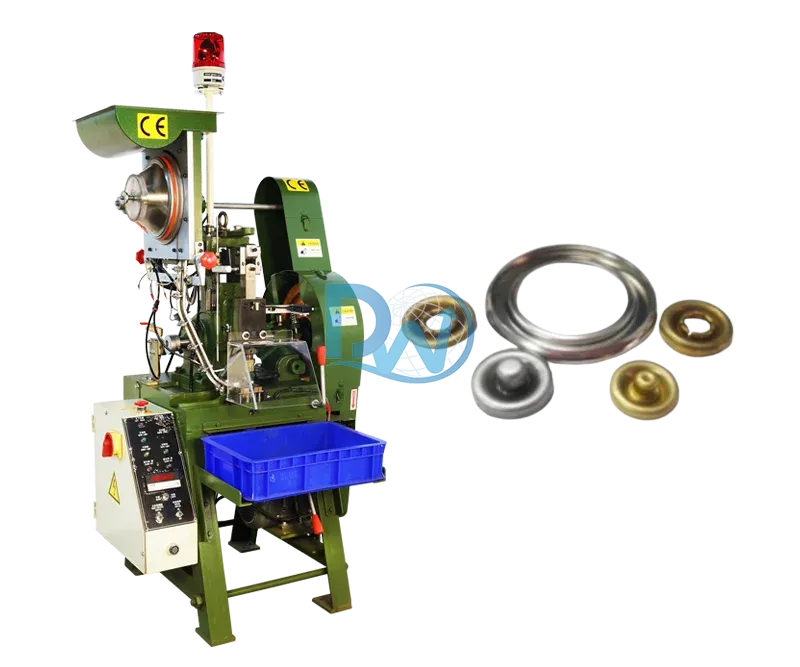
An automatic snap button machine is an advanced fastening solution used to attach snap buttons quickly and accurately to garments, bags, footwear, uniforms, leather products, and fashion accessories. It helps manufacturers increase production speed, reduce manual effort, and maintain consistent button placement across large quantities.
Snap buttons are commonly used in shirts, jackets, jeans, babywear, sportswear, workwear, handbags, and many other textile products. When buttons are attached manually, the process can be slow and may result in uneven pressure, incorrect alignment, or product damage. An automatic machine helps reduce these problems by applying controlled pressure and repeating the fastening process consistently.
What Is an Automatic Snap Button Machine?
An automatic snap button machine is designed to feed, position, and fix snap button components with limited manual involvement. Depending on the model, the operator may only need to place the fabric under the pressing area and activate the machine.
The machine then joins the button components using controlled force. Advanced models may include automatic button feeding, sensor-based operation, foot-pedal control, safety guards, digital settings, and production counters.
These machines are suitable for businesses that handle medium- or large-scale production and need faster output than manual or hand-operated machines can provide.
How the Machine Works
A snap button normally consists of multiple components, such as a cap, socket, stud, and post. The machine uses a compatible die set to press these parts together through the fabric or material.
The basic process includes:
- Loading the snap button components
- Installing the correct die set
- Positioning the garment or material
- Activating the machine
- Applying controlled pressing force
- Checking the attached button
In automatic-feeding machines, the components may move from the feeder directly into the pressing position. This saves time and reduces the need to handle each small button part separately.
Benefits of an Automatic Snap Button Machine
Higher Production Speed
One of the biggest advantages is faster output. The machine can attach buttons repeatedly with less time between operations, making it suitable for bulk garment orders.
Consistent Button Fixing
Controlled pressure helps ensure that each snap button is attached with similar strength. Consistency is especially important for uniforms, branded garments, export orders, and quality-controlled production.
Reduced Labour Effort
Manual pressing requires physical force and continuous handling. Automatic operation reduces operator fatigue and allows workers to manage larger quantities more comfortably.
Better Product Appearance
Correct alignment and controlled pressing help produce a cleaner finish. The machine can reduce crooked buttons, loose fittings, crushed caps, and visible marks on the material.
Lower Rejection Rate
Incorrectly fixed buttons may cause garment rejection, rework, or customer complaints. A properly adjusted automatic snap button machine can help reduce these production losses.
Suitable for Repetitive Orders
Factories producing the same garment style in large quantities can benefit from stable machine settings and repeatable performance.
Applications of Automatic Snap Button Machines
These machines are used across garment, textile, leather, footwear, and accessory manufacturing industries.
Common applications include:
- Denim jeans
- Shirts and jackets
- Baby garments
- Raincoats
- Sportswear
- School uniforms
- Industrial workwear
- Leather bags
- Handbags and wallets
- Shoes and sandals
- Caps and fashion accessories
- Tent and canvas products
The correct machine and die set must be selected according to the button size, button material, fabric thickness, and intended application.
Important Features to Consider
Before purchasing an automatic snap button machine, manufacturers should evaluate several technical and operational factors.
Compatible Button Types
Some machines are designed for metal snaps, while others may support plastic snaps, ring snaps, spring snaps, or specific branded fasteners. Buyers should confirm compatibility before purchase.
Adjustable Pressure
Different fabrics require different levels of pressing force. Delicate babywear needs less pressure than denim, leather, or thick canvas material.
Automatic Feeding System
A reliable feeder can improve speed and reduce button-handling time. It should also feed the components without frequent jamming.
Safety Protection
Safety guards, sensors, emergency stops, and controlled activation systems help protect the operator’s hands during production.
Production Speed
The expected output per minute or hour should match the factory’s workload. Extremely high speed is not useful if the operator cannot position garments accurately.
Die Availability
The machine should support easily available dies for the required button styles and sizes. Custom dies may be needed for specialised snap buttons.
Maintenance Support
Spare parts, technician availability, warranty, and after-sales service are important for reducing production downtime.
Automatic vs Manual Snap Button Machines
Manual snap button machines are suitable for small workshops, sample production, repair work, and low-volume orders. They are affordable and simple to operate but require more physical effort.
Automatic machines are more suitable for factories and growing businesses with regular bulk production. They offer better speed and consistency but require higher investment, proper setup, and routine maintenance.
A semi-automatic model can provide a middle option. It may require manual fabric positioning while automating the pressing or button-feeding process.
Installation and Operator Training
The machine should be installed on a stable surface with proper electrical or pneumatic connections, depending on its design. Incorrect installation may lead to vibration, uneven pressing, or repeated faults.
Operators should be trained in:
- Die installation
- Pressure adjustment
- Button loading
- Material positioning
- Safety procedures
- Jam removal
- Routine cleaning
- Basic troubleshooting
Testing should always be carried out on scrap fabric before beginning commercial production.
Maintenance and Care
Regular maintenance helps keep an automatic snap button machine working accurately.
The operator should clean button dust and fabric fibres from the feeding and pressing areas. Moving components may require lubrication according to the manufacturer’s instructions.
The die set should be checked for wear, damage, and incorrect alignment. Worn dies may damage snap buttons or fail to lock the components securely.
Electrical wires, air pipes, sensors, pedals, and safety guards should also be inspected regularly. Major repairs should be handled by a qualified technician.
Frequently Asked Questions
What is an automatic snap button machine used for?
It is used to attach snap buttons to garments, bags, footwear, leather products, uniforms, and accessories quickly and consistently.
Can one machine attach every type of snap button?
Not always. Machine and die compatibility depend on the button design, size, material, and fastening system.
Is the machine suitable for small businesses?
It can be suitable for a growing business with regular orders. Very small production units may begin with a manual or semi-automatic machine.
Can it be used for denim and leather?
Yes, suitable machines with the correct pressure and dies can attach snap buttons to denim, leather, and other thick materials.
Does an automatic snap button machine require compressed air?
Some models are pneumatic and require an air compressor, while others may use electric or mechanical systems.
How can button damage be prevented?
Use the correct die, set appropriate pressure, align the material properly, and test the machine before full production.
What should buyers check before purchasing?
Buyers should check button compatibility, production speed, feeding system, safety features, die availability, warranty, spare parts, and service support.
Conclusion
An automatic snap button machine is a valuable investment for garment and accessory manufacturers that need faster production, consistent button fixing, and reduced manual effort. It can improve efficiency, product appearance, and fastening quality when correctly selected and operated.
The best machine should match the required button type, material thickness, production quantity, and available factory setup. Proper operator training, suitable dies, regular testing, and timely maintenance help achieve dependable performance and reduce unnecessary production losses.