Two center tables can be made from the same wood and still look completely different. The difference is the finish. It decides how the table feels under your hand, how it handles a hot cup of chai, and how much care it needs over the years.
Most buyers focus on wood and size and leave the finish as a detail for later. This guide covers the common options so you can choose with confidence.
What a Finish Actually Does
A finish is the protective layer on top of the wood or resin. It does three jobs:
- Protects the surface from moisture, stains and scratches.
- Sets the look: flat and natural, soft and silky, or shiny and deep.
- Defines the care routine: some finishes need only a wipe, others need occasional re-oiling.
1. Matte Finish: Natural and Understated
A matte finish has almost no shine. It keeps the wood looking close to its natural state and hides small scratches and fingerprints well.
Best for: modern and minimal rooms, homes with glare from windows, people who like a natural look.
A matte coat on a Sheesham Wood Coffee Table lets the grain speak without reflections. The dark, rich tone of sheesham looks calm and grounded in matte.
Care: wipe with a soft, slightly damp cloth and dry straight away. Use coasters for hot cups.
2. Satin or Semi-Matte Finish: The All-Rounder
Satin sits between matte and glossy. It has a soft sheen that adds a little depth without looking shiny. It is easy to live with and is the most popular choice for family living rooms.
Best for: everyday use, mixed-style rooms, buyers who are unsure.
A satin finish suits a Mango Wood Coffee Table especially well. Mango wood has soft colour variation, and the gentle sheen brings it out without overpowering it.
3. Glossy Finish: Bold and Reflective
A glossy finish gives a deep, mirror-like shine. It makes colours look richer and is a good match for resin work.
Best for: statement pieces, well-lit rooms, formal or luxe interiors.
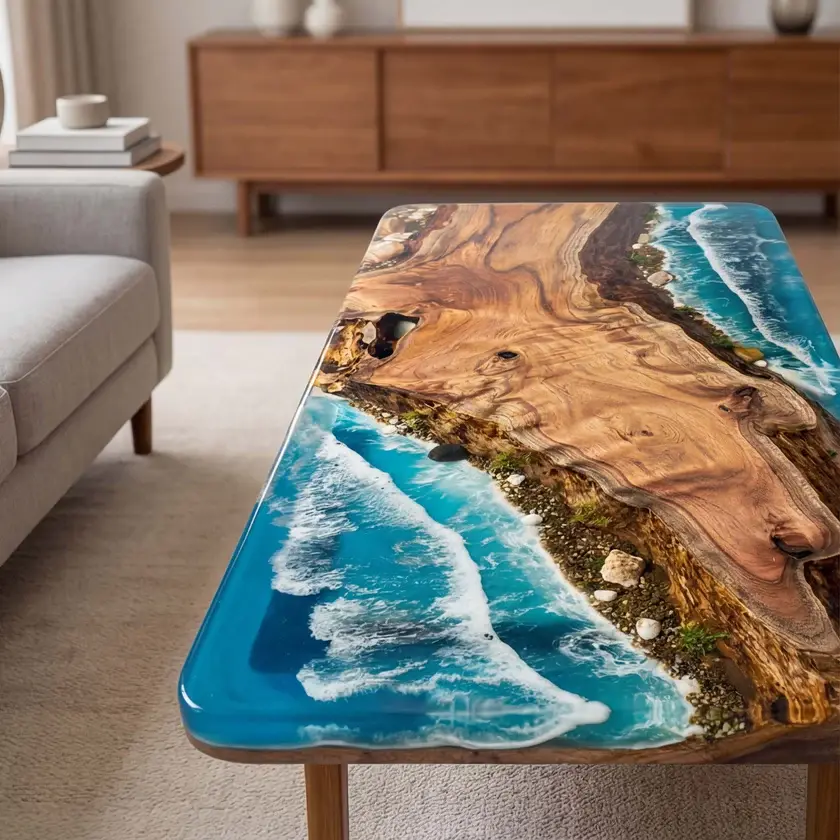
On a 3D Epoxy Resin Coffee Table, a high-gloss surface shows the layers and swirls of the resin clearly, so the table looks like it has real depth. The trade-off is that gloss shows dust, fingerprints and fine scratches more easily, so keep a microfibre cloth handy.
Care: use only soft cloths. Avoid rough scrubbing pads and strong chemical cleaners.
4. Natural Oil Finish: Warm and Repairable
An oil finish soaks into the wood rather than sitting on top. It feels warm and natural to the touch and gives a soft, low glow. Its biggest advantage is that small damage can be repaired by lightly sanding the spot and re-oiling it.
Best for: people who love the feel of real wood and don’t mind occasional upkeep.
Care: re-oil once or twice a year, depending on how heavily the table is used. Oil gives less protection against water rings than a hard coat, so coasters matter even more.
5. PU (Polyurethane) Finish: Tough and Low-Maintenance
PU forms a hard, protective film over the wood. It resists water, heat marks and everyday wear better than oil, and it needs very little maintenance. It is available in matte, satin and gloss.
Best for: busy homes, families with kids, tables that see daily tea, snacks and homework.
A PU-finished Round Wooden Coffee Table is a good choice for a lively household. The tough surface handles daily use, and the round shape keeps edges friendly.
6. Wax Finish: Soft and Traditional
Wax gives a gentle, silky feel and a traditional look. It is easy to apply but wears off faster than PU or oil, so it needs regular topping up.
Best for: rustic and traditional interiors, low-use tables.
Finishes on Resin Tables
Resin has its own surface, so the finish question is a little different.
- Polished resin is glossy and very smooth. It brings out colour and depth.
- Satin resin is softer and reduces glare, which suits rooms with lots of daylight.
- Wood areas next to resin are usually finished with matching oil or PU so the whole top feels even.
On a River Wooden Coffee Table, the wood edges and the resin channel meet in one flat surface. A consistent finish across both makes the table look like a single piece. For an epoxy resin center table, ask the maker how the resin was cured and polished, as this affects both the look and how well it resists scratches.
Finish Comparison at a Glance
| Finish | Look | Protection | Upkeep |
|---|---|---|---|
| Matte | Natural, flat | Good | Low |
| Satin | Soft sheen | Good | Low |
| Glossy | Deep shine | Very good | Low (shows dust) |
| Natural oil | Warm, organic | Moderate | Re-oil yearly |
| PU | Tough film | Very good | Very low |
| Wax | Silky, traditional | Low to moderate | Regular waxing |
Questions to Ask Before You Order
- Which finish is used on the top and which on the sides and legs?
- Is it heat and water resistant, and up to what level?
- Can I see a sample in matte, satin and gloss?
- How do I touch it up if it gets scratched?
- Is the finish safe for homes with children?
A good center table manufacturer will answer these questions openly and show you finish samples. If you are sourcing for a cafe, hotel or showroom, ask your center table supplier to use the same finish across all pieces so the look stays consistent. If you are nearby, a center table manufacturer in Delhi can also let you see finish samples in person.
Final Thoughts
There is no single best finish, only the best one for how you live. If you like a natural look, go matte or oil. If you have a busy household, PU is the practical choice. If you want a showpiece, choose gloss on a resin table. Match the finish to your routine, and your table will look good for years.
Explore the range: See the full collection of center tables and choose the finish that suits your home.