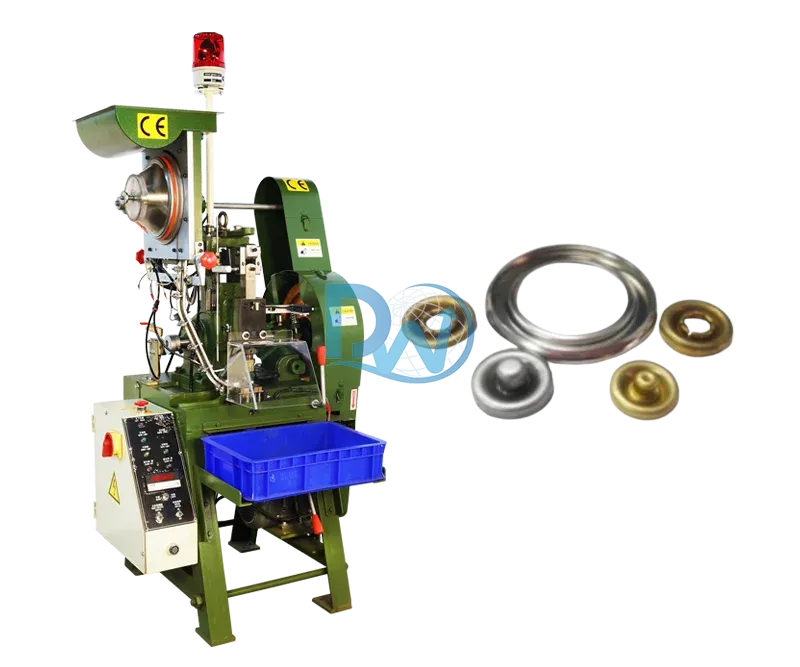
Snap buttons are commonly attached to shirts, jackets, jeans, uniforms, babywear, bags, shoes, leather goods, and fashion accessories. A snap button attaching machine helps manufacturers fix these fasteners accurately without damaging the material. Businesses researching the Snap Button Machine Price India should compare more than the initial machine cost.
The final price depends on the machine type, production capacity, automation level, compatible buttons, included dies, brand, warranty, and after-sales service. Selecting equipment according to production requirements can improve speed, reduce labour effort, and maintain consistent button quality.
Snap Button Machine Options Available in India
Manufacturers can choose from manual, hand-operated, foot-operated, pneumatic, semi-automatic, and fully automatic machines. Each model is designed for a different level of production.
Manual machines are suitable for boutiques, tailoring shops, sample-making departments, home businesses, and small garment units. The operator places the button components and applies pressure using a lever. These machines are simple, compact, and easy to maintain.
Foot-operated machines allow the operator to control the pressing action using a pedal. Both hands remain free for holding and positioning the fabric. They are useful for businesses that need better speed without investing in advanced automation.
Pneumatic machines use compressed air to attach buttons. They offer controlled pressure and require less physical effort. These models are suitable for medium-sized garment, bag, and leather production units.
Semi-automatic machines provide better consistency and production speed. Fully automatic models may include automatic button feeding, electronic controls, counting systems, and safety sensors. Their advanced features increase the Snap Button Machine Price India, but they can support large-scale production.
Main Factors That Determine Machine Cost
The machine’s automation level is one of the biggest price factors. A basic hand press usually costs less than a pneumatic or automatic model. However, a lower purchase price does not always mean lower long-term production costs.
Production speed also influences the machine value. A business producing thousands of garments may save labour and time by selecting an automatic feeding system. A small unit with limited daily work may not need such expensive equipment.
Build quality is another important consideration. A strong frame, accurate pressing mechanism, durable motor, quality electrical components, and stable working table can improve machine life.
The type of button also matters. Some machines are designed for snap fasteners only, while others can attach eyelets, rivets, jeans buttons, hooks, or decorative fasteners by changing the dies.
Buyers should check whether the quoted price includes dies, feeders, installation, training, transportation, taxes, and accessories. These additional expenses can affect the total machine investment.
Importance of Button and Fabric Compatibility
Not every snap button machine is suitable for every product. Buyers should first identify the button material, size, shape, and component design.
Garment manufacturers may work with plastic snaps, metal press buttons, ring snaps, spring snaps, or four-part fasteners. Each type requires a compatible die set.
Fabric thickness must also be considered. Lightweight cotton, denim, leather, canvas, synthetic material, and multilayer garments may require different pressure settings.
Excessive pressure can damage the fabric or deform the button. Insufficient pressure may create loose fastening. A suitable machine should allow proper pressure adjustment according to the material.
Before finalising the purchase, buyers should send fabric and button samples to the supplier. A machine demonstration can help evaluate fitting quality, alignment, speed, noise level, and ease of operation.
Manual or Automatic Machine: Which One Is Better?
A manual machine is usually suitable for low-volume work. It requires limited space, consumes no electricity, and involves simple maintenance. It is also useful for sampling, alterations, and customised garment production.
An automatic machine is more appropriate for large orders and continuous production. Automatic button feeding reduces the need to place each component manually. It can improve speed and maintain consistent attachment.
However, automatic machines require a higher investment, regular maintenance, trained operators, and reliable technical support. Businesses should compare the expected production output with the total machine cost.
While evaluating the Snap Button Machine Price India, buyers should calculate the cost per finished garment. A higher-priced machine may provide better value when it reduces labour requirements, rejection rates, and production delays.
Service, Spare Parts and Maintenance
After-sales service is important when buying industrial machinery. Buyers should confirm the warranty period, technician availability, spare-part supply, installation support, and operator training.
Dies and feeders may wear out after regular use. Their replacement cost and availability should be checked before purchasing the machine.
Routine maintenance includes cleaning the pressing area, inspecting dies, checking air pressure, lubricating moving parts, and tightening loose components. Proper maintenance improves attachment accuracy and reduces unexpected breakdowns.
Safety guards, emergency controls, stable mounting, and correct operator training are also essential for avoiding workplace accidents.
Frequently Asked Questions
What affects the price of a snap button machine?
Machine type, automation, production capacity, button compatibility, included dies, build quality, brand, and service support affect the price.
Is a manual machine suitable for garment production?
Yes. It is suitable for low-volume garment production, boutiques, sampling units, and tailoring businesses.
Why does an automatic machine cost more?
It may include automatic button feeding, faster operation, electronic controls, safety sensors, and higher production capacity.
Can one machine attach multiple fasteners?
Some machines support interchangeable dies for snaps, rivets, eyelets, hooks, and jeans buttons. Buyers should confirm compatibility.
Should buyers request a demonstration?
Yes. A demonstration helps check attachment quality, operating speed, pressure control, and compatibility with the actual fabric and button.
Conclusion
Choosing a snap button machine requires proper comparison of production volume, button type, material, automation, and service support. The lowest-priced model may not always deliver the best productivity or attachment quality.
When comparing the Snap Button Machine Price India, buyers should consider the complete ownership cost, including dies, maintenance, labour, spare parts, and production efficiency. A suitable machine can improve fastening strength, reduce defects, save time, and support reliable garment manufacturing.