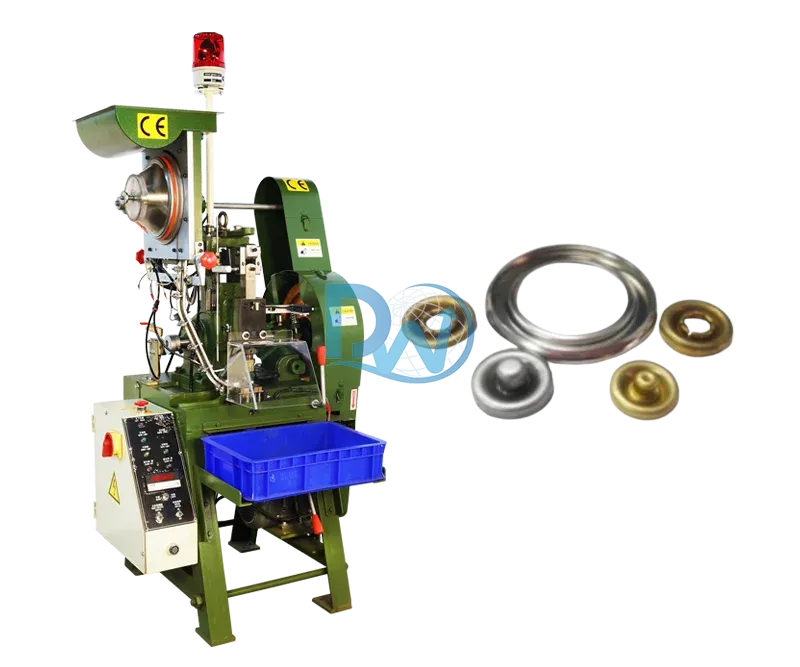
A snap fastener machine is widely used in garment, leather, bag, footwear, and textile manufacturing units for attaching snap buttons securely and accurately. It helps manufacturers fix press studs, metal snaps, plastic snaps, rivets, eyelets, and similar accessories with consistent pressure.
Snap buttons are commonly found on jackets, jeans, shirts, uniforms, baby garments, wallets, handbags, belts, shoes, raincoats, and industrial fabric products. Attaching these fasteners manually can be slow and may result in uneven placement. A suitable snap fastener machine improves production speed, product quality, and fastening strength.
What Is a Snap Fastener Machine?
A snap fastener machine is a specialized machine designed to join the different components of a snap button. Most snap fasteners consist of multiple parts, such as a cap, socket, stud, and post.
The machine holds these components in a specific die set and presses them together through the material. The pressure creates a strong connection that allows the button to open and close repeatedly.
Depending on the manufacturing requirement, these machines may be manually operated, foot-operated, pneumatic, electric, semi-automatic, or fully automatic.
Why Manufacturers Use Snap Fastener Machines
Garment and accessory manufacturers need speed and consistency during bulk production. Manual fixing tools may not provide uniform pressure, especially when workers have to attach hundreds or thousands of buttons every day.
A snap fastener machine applies controlled pressure to each button. This reduces the possibility of loose fastening, damaged button caps, torn fabric, or incorrect alignment.
The machine also helps manufacturers maintain the same button position and attachment quality across an entire production batch. This is especially important for branded garments, export orders, uniforms, and premium leather products.
Different Types of Snap Fastener Machines
Hand-Operated Snap Fastener Machine
A hand-operated machine is a simple and affordable option for small workshops, boutiques, repair units, sample rooms, and home-based businesses.
The operator manually places the fastener parts and material in the die. A lever is then pulled to apply pressure.
These machines are easy to install and do not require electricity or compressed air. However, they are not ideal for large-scale production because their speed depends entirely on the operator.
Foot-Operated Snap Fastener Machine
A foot-operated model allows the operator to keep both hands free for handling and positioning the fabric. This provides better control while working with larger garments, bags, and leather items.
The machine is activated using a foot pedal. It is suitable for small and medium production units that require better speed than a basic hand press.
Pneumatic Snap Fastener Machine
A pneumatic machine works with compressed air. It provides strong and uniform pressure with less physical effort from the operator.
Pneumatic machines are suitable for denim, thick fabric, leather, belts, bags, and industrial materials. Their pressure can often be adjusted according to the material thickness and fastener type.
An air compressor is usually required to operate this machine.
Automatic Snap Fastener Machine
An automatic snap fastener machine is designed for continuous and high-volume production. It may automatically feed the button components into the die area and complete the attachment process after the material is positioned.
These machines reduce manual handling, increase output, and maintain consistent quality. They are commonly used in large garment factories, denim units, uniform manufacturers, and export houses.
Major Applications
Snap fastener machines are used across several manufacturing industries. In garment production, they attach buttons to shirts, jeans, jackets, trousers, children’s wear, uniforms, sportswear, and workwear.
Leather-product manufacturers use these machines for handbags, wallets, purses, belts, shoes, watch straps, and fashion accessories.
They are also used for tents, tarpaulins, curtains, seat covers, rainwear, medical products, and promotional items.
By changing the die set, some machines can also attach eyelets, rivets, hooks, grommets, and decorative components.
Benefits of a Snap Fastener Machine
One of the main benefits is increased production speed. Even a basic machine can attach buttons faster than ordinary manual tools.
The machine also improves accuracy by applying equal pressure during each operation. Consistent pressure helps prevent loose fasteners and reduces the risk of button failure during use.
It can reduce worker fatigue, particularly when pneumatic or automatic models are used. Operators do not need to apply heavy manual pressure repeatedly throughout the day.
Another advantage is reduced wastage. Correct alignment and suitable pressure help prevent damaged fasteners, fabric tears, and rejected products.
Choosing the Correct Machine
The right machine should be selected according to the production requirement. Small businesses with limited daily orders may choose a hand-operated or foot-operated model. Medium-sized manufacturers may prefer a pneumatic machine, while high-volume factories may require an automatic system.
The type of snap button is equally important. Ring snaps, spring snaps, plastic snaps, decorative snaps, rivets, and eyelets may require different dies or machines.
Manufacturers should also consider the thickness and type of material. Lightweight fabric needs controlled pressure, while denim, canvas, and leather may require stronger machines.
Other important factors include machine speed, safety features, die compatibility, spare-part availability, maintenance needs, power requirements, and technical support.
Role of Dies in Button Attachment
The die set is one of the most important parts of a snap fastener machine. It holds the fastener components in the correct position during pressing.
Each button size and style generally requires a compatible die. Using the wrong die can damage the button, create weak attachment, or cut the fabric.
Dies should be cleaned regularly because dust, thread, adhesive, and metal particles may affect their performance. Worn or damaged dies should be replaced promptly.
Machine Maintenance and Safety
Regular maintenance keeps the snap fastener machine operating smoothly. Moving parts should be lubricated where required, while bolts, screws, pedals, and electrical components should be checked periodically.
Pneumatic systems should be inspected for air leakage, moisture, and unstable pressure. The air compressor should provide clean and consistent airflow.
Operators must receive proper training before using the machine. Fingers should always remain away from the pressing area. Machines equipped with safety guards, dual-hand controls, sensors, and emergency-stop buttons offer additional protection.
Frequently Asked Questions
What can a snap fastener machine attach?
It can attach snap buttons, press studs, rivets, eyelets, hooks, and other compatible garment accessories.
Is a manual machine suitable for commercial work?
Yes, it is suitable for low-volume commercial work, sampling, tailoring, repairs, and small production units.
Can the machine work on denim?
Yes, a strong manual, pneumatic, or automatic machine with the correct die can attach fasteners to denim.
Does every snap button need a separate die?
Different button sizes and designs usually require compatible die sets for proper attachment.
Why does the fabric tear during attachment?
Fabric may tear because of excessive pressure, incorrect dies, poor alignment, sharp fastener parts, or unsuitable backing material.
Which machine is best for bulk production?
A pneumatic, semi-automatic, or fully automatic snap fastener machine is generally better for bulk production.
How can loose buttons be prevented?
Using the correct pressure, suitable die set, quality fasteners, and proper machine alignment helps prevent loose buttons.
Conclusion
A snap fastener machine is an essential tool for manufacturers that need quick, secure, and uniform button attachment. It supports garment, leather, footwear, bag, and textile production by improving speed and reducing fastening errors.
Selecting the correct machine according to production volume, material type, and fastener design can improve efficiency and finished-product quality. With proper dies, regular maintenance, and trained operators, the machine can provide dependable performance for long-term manufacturing operations.