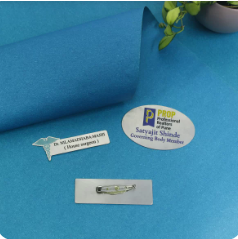
Professional identification plays an important role in offices, retail stores, schools, exhibitions, hospitality spaces, and corporate events. A well-designed name badge helps people recognise employees, understand their roles, and communicate with greater confidence. An MDF Name Badge offers a creative alternative to conventional plastic and metal badges by combining a natural appearance with extensive customisation options.
MDF stands for medium-density fibreboard, a smooth engineered wood material suitable for printing, engraving, painting, and precision cutting. It allows organisations to create badges that reflect their brand personality while remaining lightweight and comfortable for regular use.
A Modern Alternative to Standard Badges
Many businesses use similar plastic or metallic name tags, which can sometimes appear ordinary. MDF provides a warmer and more distinctive surface that is especially suitable for creative agencies, cafés, handmade brands, educational institutions, event organisers, and environmentally themed businesses.
An MDF Name Badge can be designed with a simple corporate layout or a decorative visual style. Its appearance can be adapted for formal uniforms, casual staff clothing, themed events, workshops, exhibitions, and customer-facing roles.
The surface may display an employee’s name, department, designation, organisation logo, event category, or short message. By presenting this information clearly, the badge improves recognition and supports professional interaction.
Flexible Shapes and Sizes
One of the key advantages of MDF is that it can be cut into many shapes. Standard options include rectangular, oval, round, square, and capsule-shaped badges. Custom shapes inspired by logos, products, icons, or event themes can also be produced.
A restaurant may select a badge shaped like a cup or plate, while a school can choose designs featuring books, shields, or stars. Event organisers may use different shapes to identify speakers, guests, volunteers, and organisers.
The badge size should be large enough for easy reading but not so large that it becomes uncomfortable. A balanced design ensures that the name remains visible while the logo and supporting details remain neatly arranged.
Printing and Engraving Possibilities
Different production methods can create different visual effects. UV and digital printing allow full-colour logos, gradients, illustrations, and detailed text to be added directly to the badge.
Laser engraving removes part of the surface and creates permanent text or artwork. This method provides a subtle, natural, and handcrafted appearance. Engraved designs are particularly suitable for minimalist brands, boutique hotels, cafés, exhibitions, and creative studios.
Printing and engraving can also be combined. For example, a logo may be printed in colour while the employee’s name is engraved underneath. Painted borders, layered MDF pieces, cut-out details, and decorative patterns may also be added for a more premium appearance.
Attachment Options for Comfortable Use
The rear attachment influences how securely and comfortably the badge can be worn. Safety pins are commonly used because they are simple and affordable. Clips are suitable for pockets, collars, and lanyards.
Magnetic fittings offer a neat appearance and do not create holes in clothing. They are often preferred for corporate uniforms, formal shirts, jackets, and premium hospitality clothing. However, magnetic fittings should be selected according to comfort and workplace requirements.
A combined pin-and-clip fitting provides flexibility, allowing users to wear the badge in different ways.
Suitable for Multiple Organisations
An MDF Name Badge can support identification across numerous industries. Offices can use it for employees, visitors, trainees, and conference participants. Retail outlets can display staff names and departments to improve customer service.
Hotels, restaurants, salons, cafés, and reception desks can use personalised badges to create a friendly and approachable experience. Schools may design badges for teachers, house captains, monitors, coordinators, and student volunteers.
MDF badges are also suitable for weddings, trade fairs, craft exhibitions, workshops, award ceremonies, networking events, and product launches. Different designs can be created for each role or participant category.
Design Tips for Better Visibility
The person’s name should remain the most prominent element. It should be written in a clear font with sufficient contrast against the background.
A badge should not include excessive text. Adding too many details can reduce readability and make the surface look crowded. A logo, name, and short designation are generally enough.
Brand colours can be included, but the text must remain easy to read. The badge should also coordinate with the employee uniform, event theme, or organisation’s visual identity.
Durability and Proper Care
MDF badges can be used repeatedly when they are properly finished and handled. A protective coating may help reduce damage from minor scratches, dirt, and moisture.
Since MDF is a wood-based material, it should not be soaked in water or exposed to heavy rain. Cleaning should be done with a soft, dry cloth or a slightly damp cloth when required.
Badges should be stored carefully when not in use. Keeping them in a dry box, pouch, or organiser can protect the surface and rear attachment.
Frequently Asked Questions
1. Where can MDF name badges be used?
They can be used in offices, schools, hotels, restaurants, stores, exhibitions, conferences, workshops, and corporate events.
2. Can every employee have a different name?
Yes, each badge can be personalised with an individual name, designation, department, or employee code.
3. Is laser engraving available on MDF badges?
Yes, names, logos, patterns, and other details can be engraved using laser technology.
4. Can MDF badges have colourful designs?
Yes, full-colour logos, backgrounds, graphics, and brand elements can be printed on the surface.
5. Are magnetic attachments available?
Yes, badges can be fitted with magnets, pins, clips, or combined attachments.
6. Can custom-shaped badges be manufactured?
Yes, MDF can be precision-cut into customised shapes based on logos, symbols, products, or event themes.
7. How should an MDF badge be cleaned?
It should be wiped gently with a soft cloth. Excessive water, harsh cleaners, and abrasive materials should be avoided.
Conclusion
An MDF Name Badge offers a personalised and visually appealing way to improve identification in professional, educational, retail, hospitality, and event environments. Its smooth surface, lightweight structure, and flexible customisation make it suitable for both formal and creative designs.