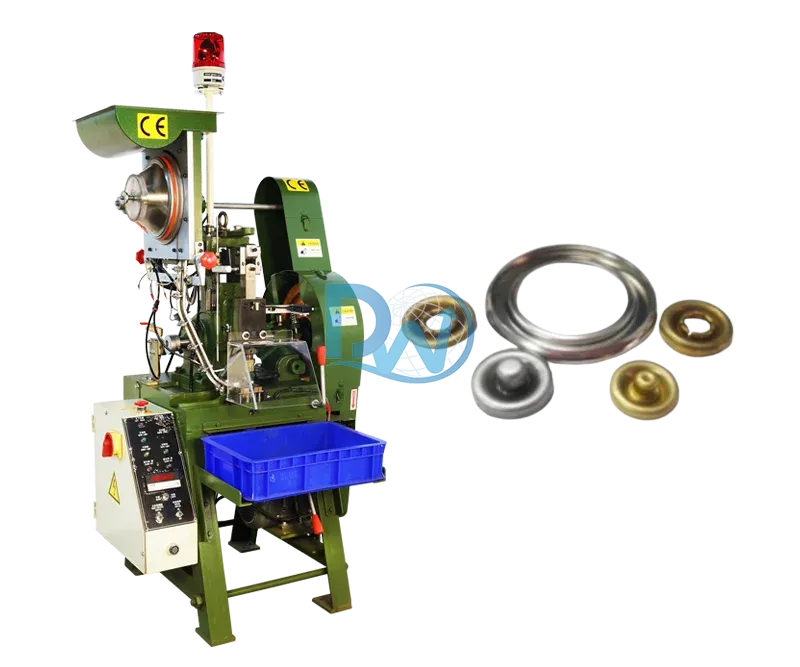
Snap buttons are commonly used in garments, bags, leather products, footwear, uniforms, baby clothing, and fashion accessories. Although these fasteners appear simple, they must be installed with proper pressure and alignment to ensure secure and smooth operation. A Snap Button Attaching Machine helps manufacturers attach snap fasteners quickly, accurately, and consistently across small or large production batches.
Using a dedicated machine reduces dependence on basic hand tools and supports a cleaner final finish. It can also minimise fabric damage, loose buttons, uneven pressing, and unnecessary production delays. From tailoring workshops to large garment factories, snap button machines are valuable equipment for improving fastening quality.
Understanding Snap Button Installation
A snap button usually contains multiple components that form a male and female locking system. These components may include a cap, socket, stud, and post. When the matching parts are pressed together, they create a fastening that can be opened and closed repeatedly.
During installation, each component must be placed correctly in a matching die. The garment or material is positioned between the button parts, and the machine applies pressure to lock them securely.
Incorrect pressure may leave the snap loose or damage its shape. Similarly, poor alignment can create tilted buttons, torn fabric, or fastening problems. A Snap Button Attaching Machine provides better control over these factors than manual hammering methods.
Different Machine Options
Several types of snap button machines are available for different production requirements.
A manual machine uses a hand-operated lever. It is suitable for boutiques, tailoring units, sampling departments, repair centres, and small businesses. Manual machines are simple to use and generally do not require electricity or an air compressor.
Foot-operated machines use a pedal mechanism. Since the operator controls the machine with a foot, both hands remain available for positioning the fabric and button parts. This can improve placement accuracy during repetitive work.
Pneumatic machines use compressed air to apply controlled pressure. They require less physical effort and can maintain consistent fastening strength. These machines are widely used in medium and large garment factories.
Automatic machines are designed for high-volume production. They may include automatic button feeding, electronic controls, safety sensors, production counters, and adjustable pressure settings. Such models can significantly increase daily output.
Garment Manufacturing Applications
The Snap Button Attaching Machine is widely used for attaching snaps to shirts, denim garments, jackets, coats, sportswear, rainwear, uniforms, and workwear.
In denim production, metal snap buttons may be installed on jackets, shirts, pockets, and decorative panels. Fashion brands may use coloured, engraved, antique, or logo-based snaps to enhance garment appearance.
Children’s and baby clothing often includes snap fasteners because they are easier to open and close than conventional buttons. However, these products require especially secure attachment because loose components may create safety concerns.
Uniform manufacturers use snap buttons in medical garments, industrial clothing, aprons, protective wear, and hospitality uniforms. Consistent attachment helps maintain both functionality and professional presentation.
Applications in Bags and Accessories
Snap fasteners are also used in handbags, wallets, purses, backpacks, folders, belts, and fashion accessories. They provide a convenient closure without requiring zips or complicated hardware.
Thick materials such as canvas, synthetic leather, and natural leather may require greater pressing force than lightweight fabric. A suitable machine with adjustable pressure can support different material thicknesses.
Manufacturers should select the snap size according to the product. A small wallet may require a compact fastener, while a heavy bag may need a stronger and larger snap button.
Sample testing helps confirm that the selected button, material, pressure, and die combination produces a secure result.
Importance of the Correct Die Set
Every snap button design requires a compatible upper and lower die. The die holds the button parts in position while the machine presses them together.
Using an incorrect die may crush the cap, scratch the finish, bend the post, or create an insecure attachment. It may also damage decorative logos and coloured surfaces.
Manufacturers using several button styles should keep different dies labelled and organised. Dies should be checked whenever the snap size, shape, or design changes.
Worn or damaged dies should be replaced because they may cause inconsistent pressure and poor fastening quality.
Key Advantages for Manufacturers
A Snap Button Attaching Machine can significantly improve production speed. Operators can attach more buttons in less time compared with manual tools.
The machine also helps maintain uniform pressure. This means that fasteners across the same garment batch are more likely to have a consistent appearance and attachment strength.
Pneumatic and automatic models reduce worker fatigue because the operator does not need to apply heavy physical force repeatedly. This is particularly helpful during long production shifts.
Better attachment accuracy can also reduce rejected garments, button replacement, fabric damage, and production waste. These improvements support better cost control and more reliable quality.
Selecting a Suitable Machine
The correct machine depends on the production volume, snap type, material, available workspace, and budget.
A manual machine may be appropriate for occasional use and smaller orders. A pneumatic machine is better suited to frequent production, while an automatic model may be required for large manufacturing units.
Buyers should check whether compatible die sets are readily available. Spare parts, operating guidance, warranty support, and repair services are also important considerations.
Safety features should be evaluated carefully. Industrial machines may include finger guards, dual-button controls, sensors, emergency stops, and protective covers.
Machine Maintenance
Regular maintenance helps maintain pressure accuracy and machine performance. The pressing area and dies should be cleaned to remove fabric fibres, metal particles, dirt, and oil deposits.
Moving components should be lubricated according to the manufacturer’s recommendations. Pneumatic systems should be checked for air leakage, pressure fluctuations, and damaged hoses.
Loose bolts, worn springs, damaged pedals, and misaligned dies should be corrected immediately. Continuing to use a machine with worn parts may cause defective attachments or safety problems.
Operators should receive proper training before using the equipment. Hands should remain away from the pressing zone, and safety guards should never be removed during operation.
Frequently Asked Questions
1. What types of fasteners can the machine attach?
Depending on the die set, it may attach press studs, spring snaps, ring snaps, plastic snaps, metal buttons, and decorative fasteners.
2. Is a manual machine suitable for business use?
Yes, a manual machine is suitable for tailoring shops, sampling units, boutiques, repair work, and limited production.
3. Can the same machine work with multiple button sizes?
Many machines can support multiple sizes, but the correct upper and lower dies must be installed for each snap type.
4. Why does a snap button become damaged during pressing?
Common reasons include excessive pressure, incorrect alignment, a damaged die, or the use of an unsuitable die set.
5. Can the machine attach buttons to thick leather?
Yes, a suitable heavy-duty machine with sufficient pressure and compatible dies can attach snaps to leather and thick materials.
6. How can loose snap buttons be prevented?
Correct dies, suitable pressure, proper material preparation, accurate alignment, and sample testing can help prevent loose attachment.
7. Which machine is suitable for bulk production?
Pneumatic and automatic machines are generally more suitable for bulk manufacturing because they offer speed and consistent pressure.
Conclusion
A Snap Button Attaching Machine is an important tool for garment, bag, leather, footwear, and accessory manufacturers. It supports faster installation, accurate positioning, consistent pressure, and cleaner finishing.
The best results depend on selecting the correct machine, die set, snap button, and pressure level for the material. Regular testing, operator training, safety precautions, and machine maintenance can further improve fastening quality. With proper use, a snap button machine can reduce production errors and support reliable output across different manufacturing applications.