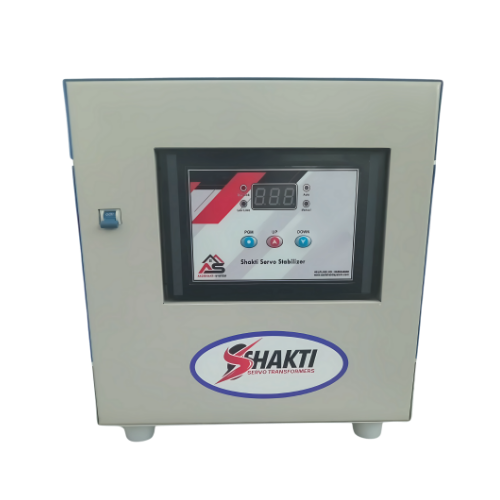
Servo stabilizer manufacturing is a specialized industrial process focused on producing high-precision voltage regulation systems used in commercial, industrial, and residential applications. With increasing dependence on sensitive electrical equipment, the demand for reliable servo voltage stabilizers has grown significantly.
A servo stabilizer helps maintain a constant output voltage despite fluctuations in the input supply. This protects machinery, appliances, and electronic systems from damage caused by overvoltage or undervoltage.
What Is a Servo Stabilizer?
A servo stabilizer is an automatic voltage correction device that uses a servo motor mechanism to regulate voltage. It continuously monitors the incoming power supply and adjusts the output to maintain stability.
These stabilizers are widely used in:
- Manufacturing units
- Hospitals
- Data centers
- Printing presses
- CNC machines
- Commercial buildings
Servo Stabilizer Manufacturing Process
The manufacturing of a servo stabilizer involves several critical steps to ensure accuracy, durability, and performance.
1. Design & Engineering
The process begins with circuit design and load requirement analysis. Engineers determine:
- Input voltage range
- Output voltage accuracy
- Capacity (KVA rating)
- Phase type (single phase or three phase)
Modern manufacturers use CAD software and testing simulations before moving to production.
2. Core & Transformer Winding
A high-quality copper-wound transformer is manufactured or assembled. The transformer is the heart of the servo stabilizer. It must handle load capacity efficiently without overheating.
Proper insulation and varnishing are essential for durability.
3. Servo Motor & Control Circuit Integration
The servo motor is installed along with the carbon brush assembly. A control circuit continuously senses voltage changes and signals the motor to adjust the transformer accordingly.
This step ensures:
- High correction speed
- Precise voltage output
- Smooth performance
4. Assembly & Enclosure Fabrication
All components are assembled inside a robust metal enclosure. The outer body is usually powder-coated to prevent corrosion and increase lifespan.
Cooling systems such as air-cooled or oil-cooled mechanisms are also integrated during this stage.
5. Testing & Quality Check
Before dispatch, every servo stabilizer undergoes:
- Load testing
- Voltage accuracy testing
- Short-circuit protection testing
- Heat resistance testing
Strict quality control ensures safe and reliable performance.
Types of Servo Stabilizers
Servo stabilizer manufacturing generally covers:
- Single Phase Servo Stabilizers – Suitable for small offices and homes
- Three Phase Servo Stabilizers – Used in industries and large commercial setups
- Air-Cooled Servo Stabilizers
- Oil-Cooled Servo Stabilizers
Selection depends on load capacity and operational environment.
Advantages of Servo Stabilizers
- High voltage correction accuracy
- Automatic voltage regulation
- Protects expensive equipment
- Increases machinery lifespan
- Energy-efficient operation
Industries that rely on continuous operations benefit greatly from stable voltage supply.
Applications in Various Industries
Servo stabilizers are essential in sectors such as:
- Textile industry
- Healthcare facilities
- IT infrastructure
- Printing industry
- Food processing units
- Educational institutions
In areas with frequent power fluctuations, they are considered a necessary investment rather than an optional device.
Why Quality Manufacturing Matters
The performance of a servo stabilizer depends heavily on manufacturing quality. Poor-quality components can lead to:
- Frequent breakdowns
- Inaccurate voltage correction
- Overheating
- Reduced equipment life
Reputed manufacturers focus on high-grade copper, reliable servo motors, and strict testing standards to deliver durable products.
Conclusion
Servo stabilizer manufacturing is a technical and precision-driven process that plays a vital role in protecting electrical equipment from voltage instability. From transformer winding to final quality testing, each step determines the reliability and efficiency of the final product.